
Epoxy and polyaspartic are the two most common professional garage floor coatings, and how they differ in chemistry, UV resistance, and cure behavior determines which system belongs in a SW Florida garage. As the only authorized Floor Shield dealer across Sarasota, Charlotte, and Manatee counties, Floor Shield of SWFL has built its business around polyaspartic garage floor coatings for Southwest Florida. This comparison reflects real-world performance in our local climate.
Most online comparisons miss the point. Some call epoxy the workhorse and polyaspartic the premium upgrade. Others say polyaspartic wins on every metric. The right answer isn't universal. It depends on where you live. In Southwest Florida, the climate does most of the deciding.
How the Two Coatings Are Built Differently
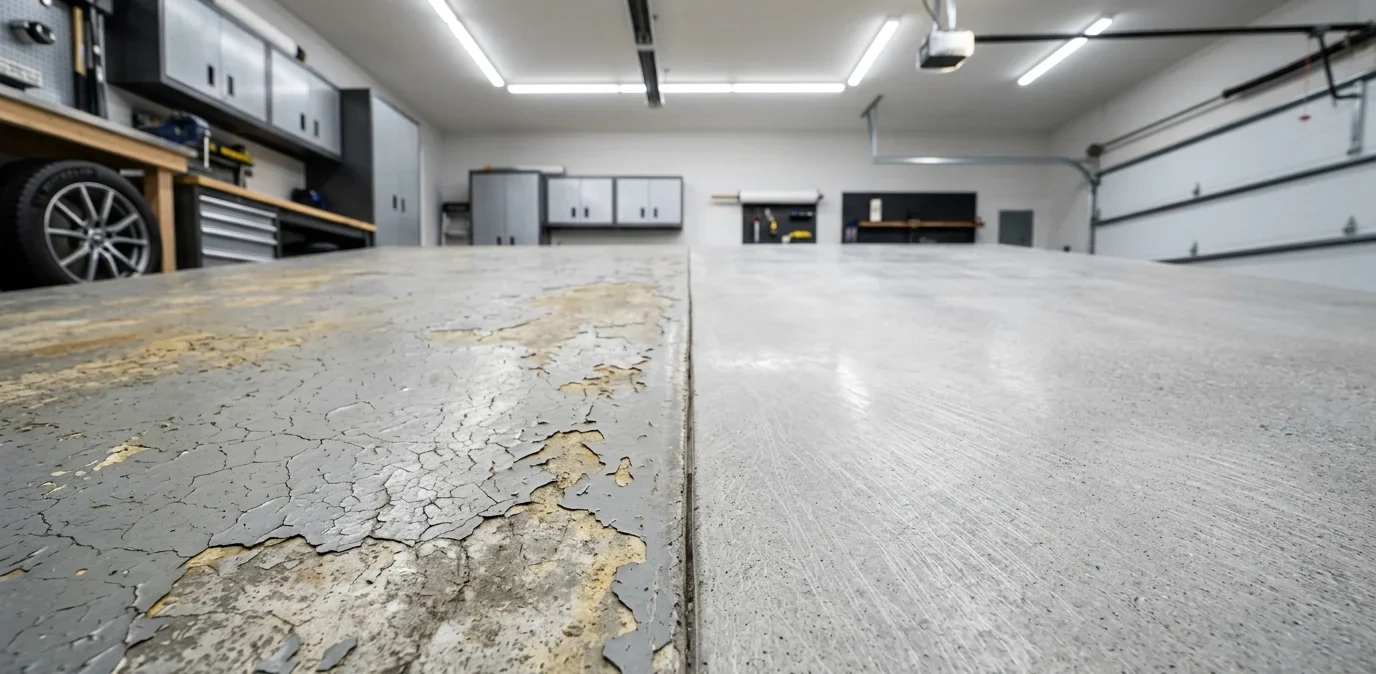
Epoxy is a two-part thermoset resin: a base and hardener that bond when mixed. Once cured, it's rigid. That rigidity provides good compressive strength but works against the coating when temperatures fluctuate. Concrete expands and contracts with heat cycles, and a rigid coating that can't flex eventually micro-cracks and delaminates. Standard epoxy also isn't UV-stable, which is why garage floor coating costs between the two systems reflect a real performance difference, not just a brand premium.
Polyaspartic is a subclass of polyurea: flexible, aliphatic, and UV-resistant. The aliphatic chemistry doesn't absorb UV radiation the way epoxy's aromatic chemistry does, so it stays clear under direct sun. It also moves with the concrete through thermal cycling rather than cracking under the stress.
UV Resistance and Heat Performance
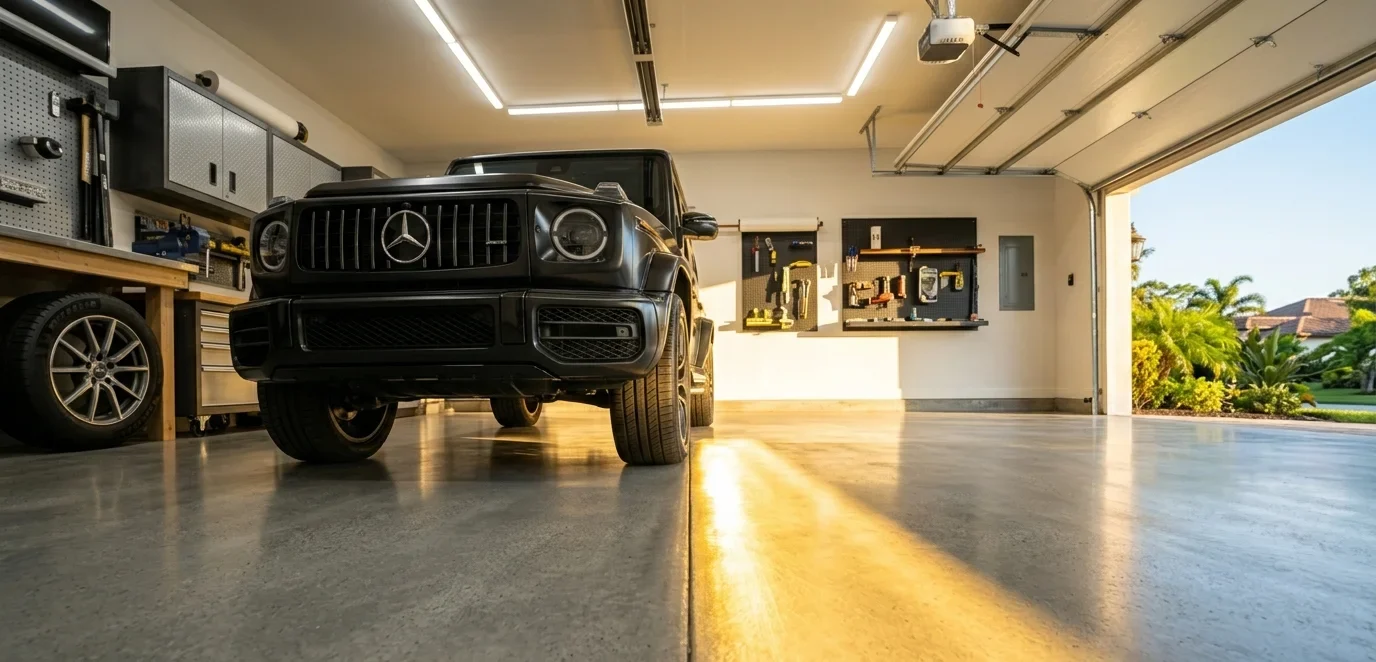
Southwest Florida's UV index runs in the extreme range during summer months. Any coating on a south-facing or open-facing garage slab in Port Charlotte absorbs that radiation year-round.
Epoxy yellows under prolonged UV exposure. That's a property of aromatic chemistry, not a product defect. A light gray floor can develop a visible amber cast within 6 to 18 months. Polyaspartic stays color-true. For homeowners investing in a professional garage floor coating meant to last a decade, that's a decisive difference.
Heat drives hot tire pickup in epoxy. Florida road surfaces heat tires significantly before they reach the garage. Whether you’re parking a commuter car in Venice or a truck down the coast, epoxy softens under concentrated heat, bonds to the tire during cooling, and gets pulled away when the car leaves. Polyaspartic's flexibility prevents this entirely.
Cure Time and Installation Disruption
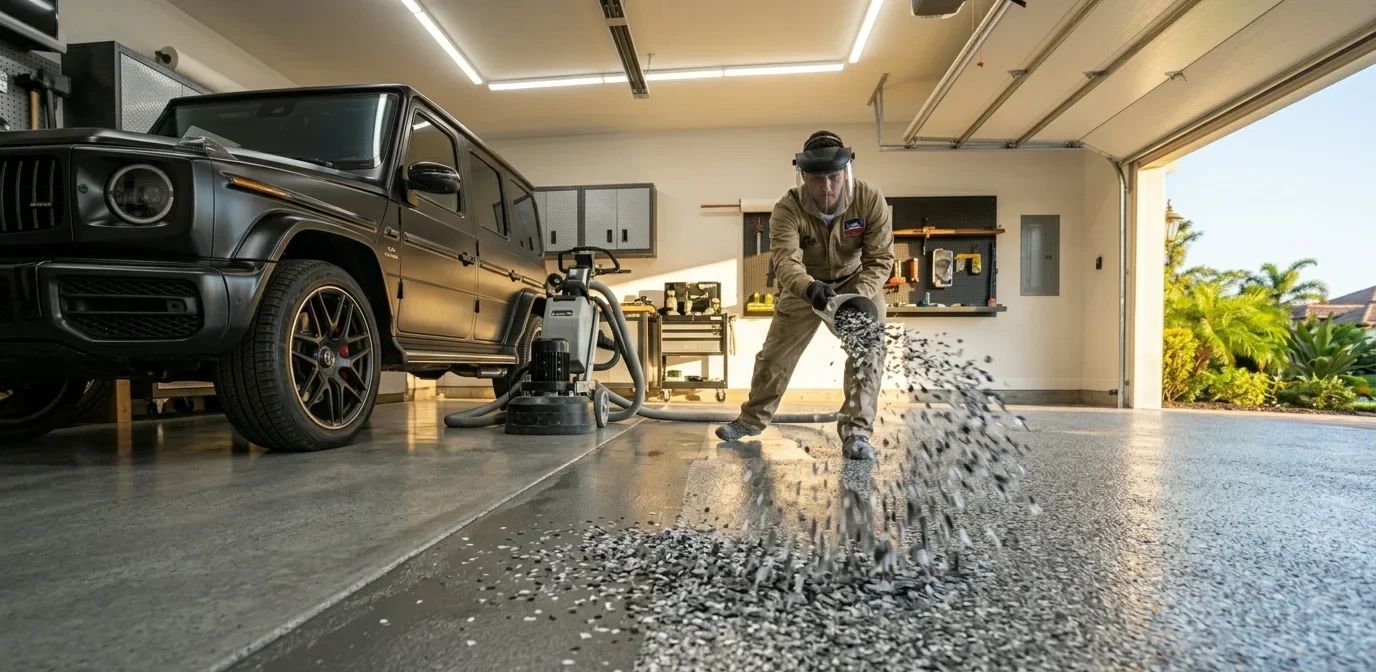
Epoxy requires 5 to 7 days of cure before vehicle traffic, a week without your garage, made longer by summer humidity.
Polyaspartic cures in hours. Floor Shield of SWFL installations are tack-free within 4 to 5 hours of the final coat, walk-ready the same evening, drive-ready the next morning. The full installation, including diamond grinding, coating, flake, and topcoat, happens in one day.
Cost and Long-Term Value
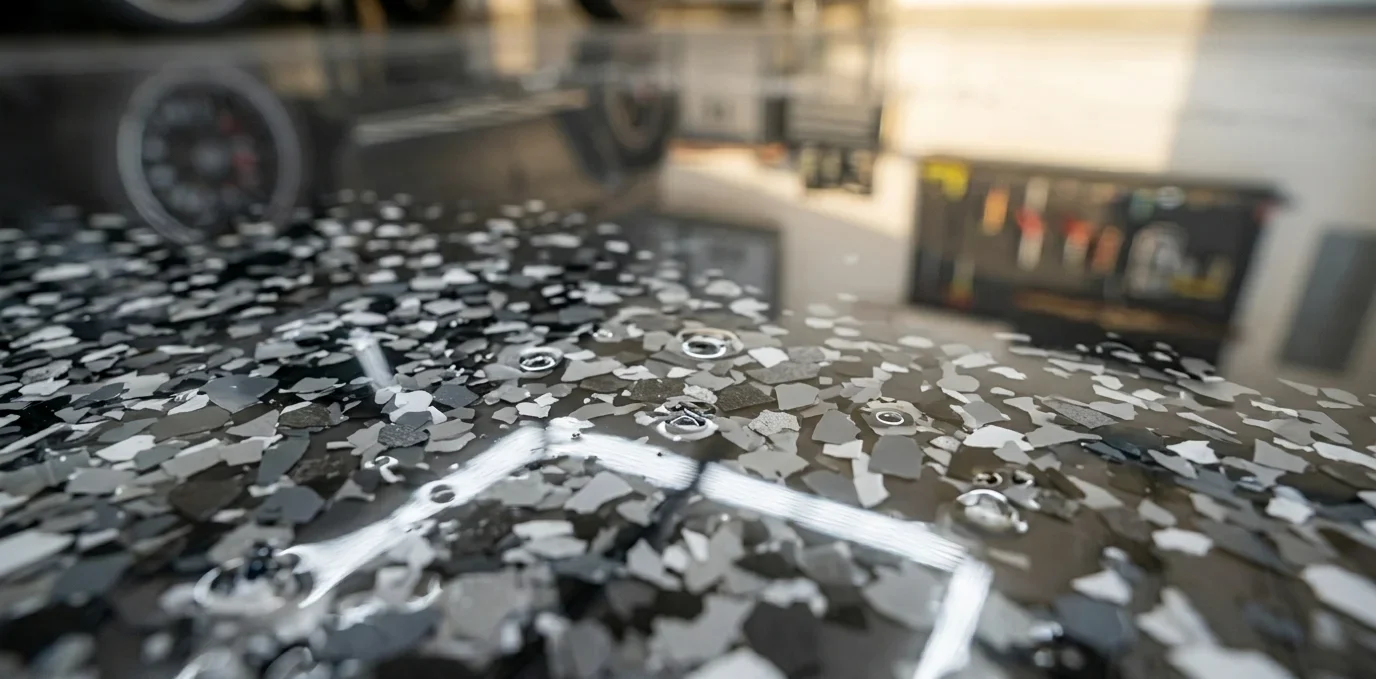
Epoxy costs $4 to $10 per square foot installed; polyaspartic runs $5 to $12, with installed pricing detailed in our polyaspartic garage floor coating cost guide. On a standard two-car garage, the difference is often just a few hundred dollars total. Homeowners are often surprised by how close the upfront numbers are.
The real variable is what you pay at years three, five, and ten, where a polyaspartic system backed by a strong warranty outlasts multiple epoxy recoat cycles.
Frequently Asked Questions
Is epoxy ever the right choice for a Florida garage floor?
For a fully enclosed garage with minimal UV exposure, epoxy can perform adequately. But most SW Florida garages see UV through open doors and face summer surface temperatures that stress epoxy's rigidity. Polyaspartic's UV stability and flexibility give it a meaningful performance edge in this specific climate.
Can polyaspartic be applied over existing epoxy?
Peeling or delaminated epoxy must be fully removed before any new coating goes down. If the existing epoxy is in good condition and well-bonded, a specialist can assess whether direct application is viable. Floor Shield of SWFL evaluates existing floors at the free in-home consultation before any quote is given.
How long does polyaspartic last compared to epoxy in Florida?
Polyaspartic lasts 10 to 20 years or more under normal residential use when properly installed. Water-based epoxy typically lasts 3 to 5 years; 100% solids epoxy can reach 10 to 20 years under ideal conditions, which are harder to sustain in SW Florida's UV and thermal environment. Polyaspartic holds its advantage here.
Make the Right Call for Your Garage
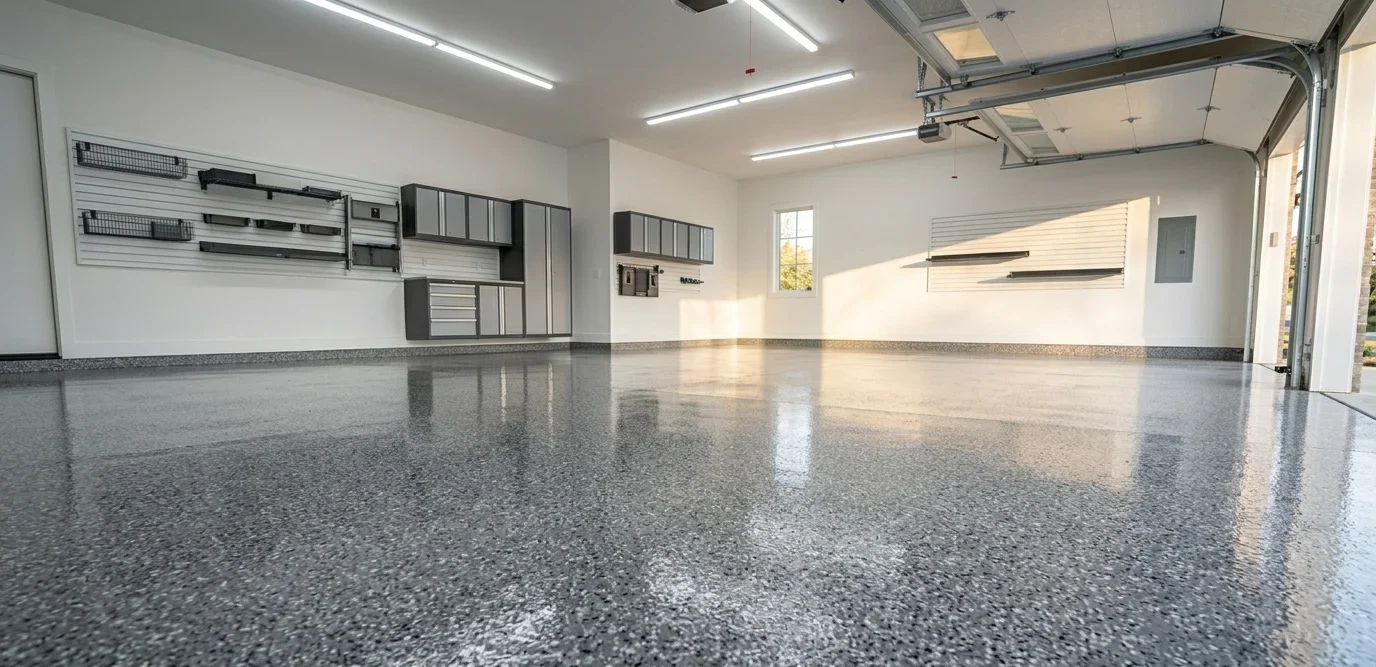
The choice becomes clear once climate factors are on the table. Epoxy works in the right conditions. Those conditions don't describe a Port Charlotte or Sarasota garage facing 300+ sunny days and surface temps that regularly exceed 120°F. Polyaspartic handles what this climate delivers.
Contact Floor Shield of SWFL at (941) 681-8407 for a a system built for Southwest Florida.