
Epoxy garage floor peeling is one of the most common coating failures in Southwest Florida, typically caused by moisture vapor pushing through the slab, inadequate surface preparation, or an epoxy formulation that wasn't built for Florida's heat and UV. Floor Shield of SWFL installs polyaspartic garage floor coatings as a replacement system for homeowners across Port Charlotte, Sarasota, and Charlotte County who are done patching a floor that was never going to hold.
The peeling is evidence of a failure that happened before the epoxy went down, or was built into the product's chemistry. Knowing which cause is driving your situation explains why patching won't hold and why recoating over the same surface produces the same result.
The Most Common Cause: Moisture Vapor Transmission
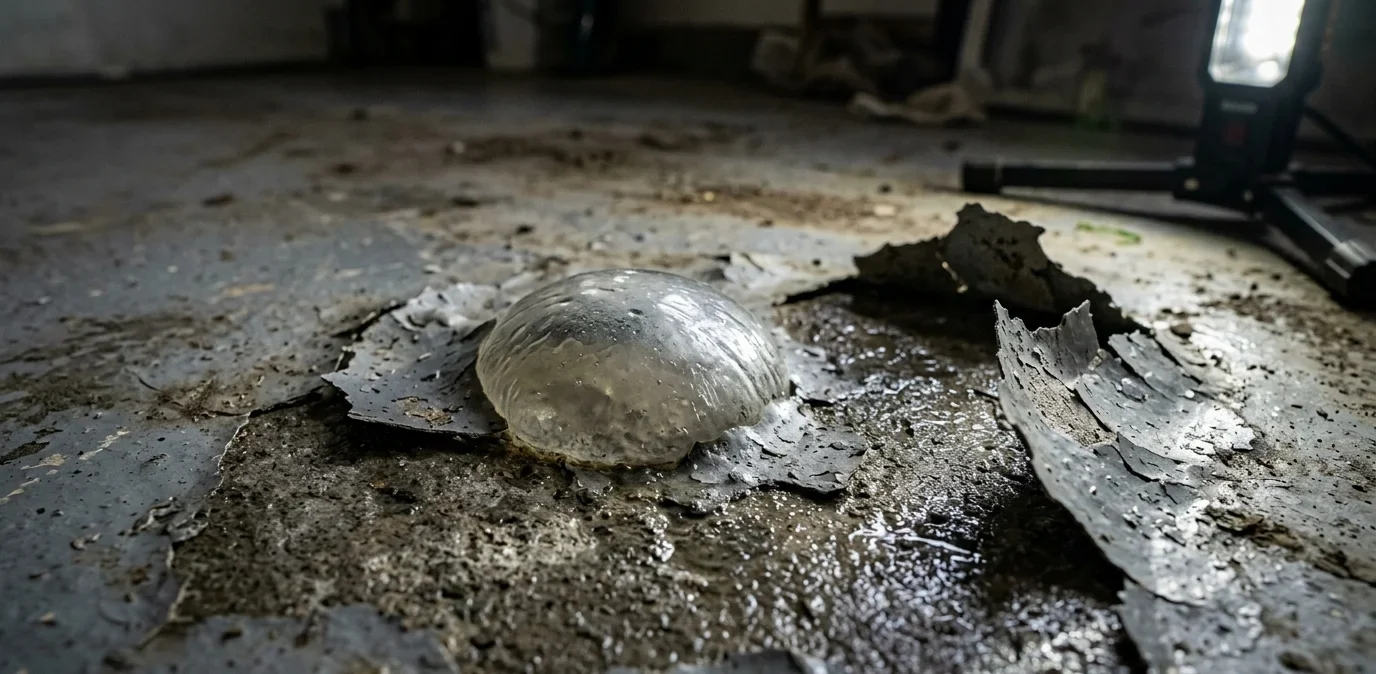
Southwest Florida's year-round humidity and high water table create the most common coating killer here: moisture vapor transmission (MVT).
Concrete slabs are porous. Water vapor from the ground migrates upward continuously. Epoxy blocks that vapor, so pressure builds beneath the coating until the bond fails. The first sign is blisters. Those grow, rupture, and the coating lifts in sheets.
In Charlotte County and Sarasota County, MVT runs worse than in drier climates: the water table stays high year-round, summer humidity keeps slab moisture elevated for months, and older homes often have no vapor barrier beneath the slab. A calcium chloride test measures MVT before installation. If levels exceed what epoxy can tolerate, and epoxy's MVT tolerance is notably low, adhesion failure is a matter of when, not if.
Poor Surface Prep: The Silent Failure Mode
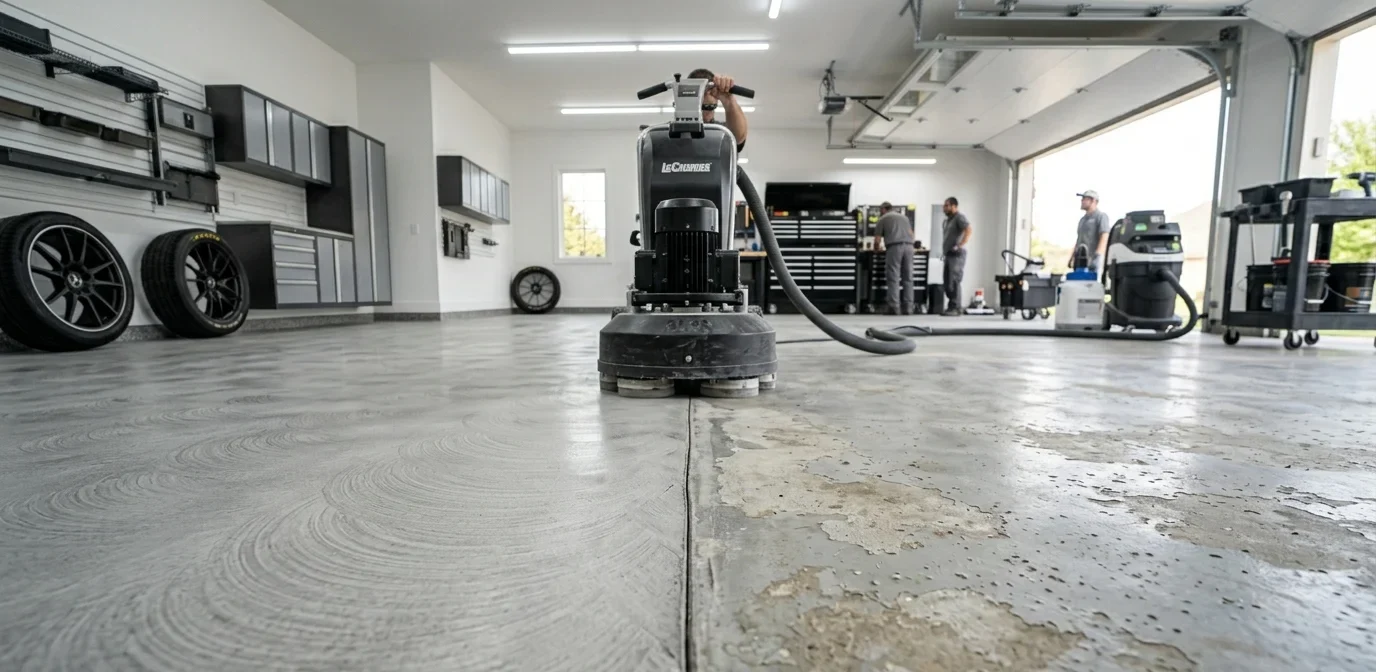
Epoxy bonds chemically to concrete and requires a specific surface profile. Diamond grinding creates it by opening the concrete's pores. Acid etching, used by DIY kits and many lower-tier contractors, produces an inconsistent profile and leaves residue that weakens adhesion.
If the floor peeled within one to two years and the installer acid-etched, prep is the likely culprit. Peeling that starts at edges, seams, or high-traffic areas is the pattern. Why professional coatings outperform consumer systems starts here.
Wrong Product for the Florida Climate
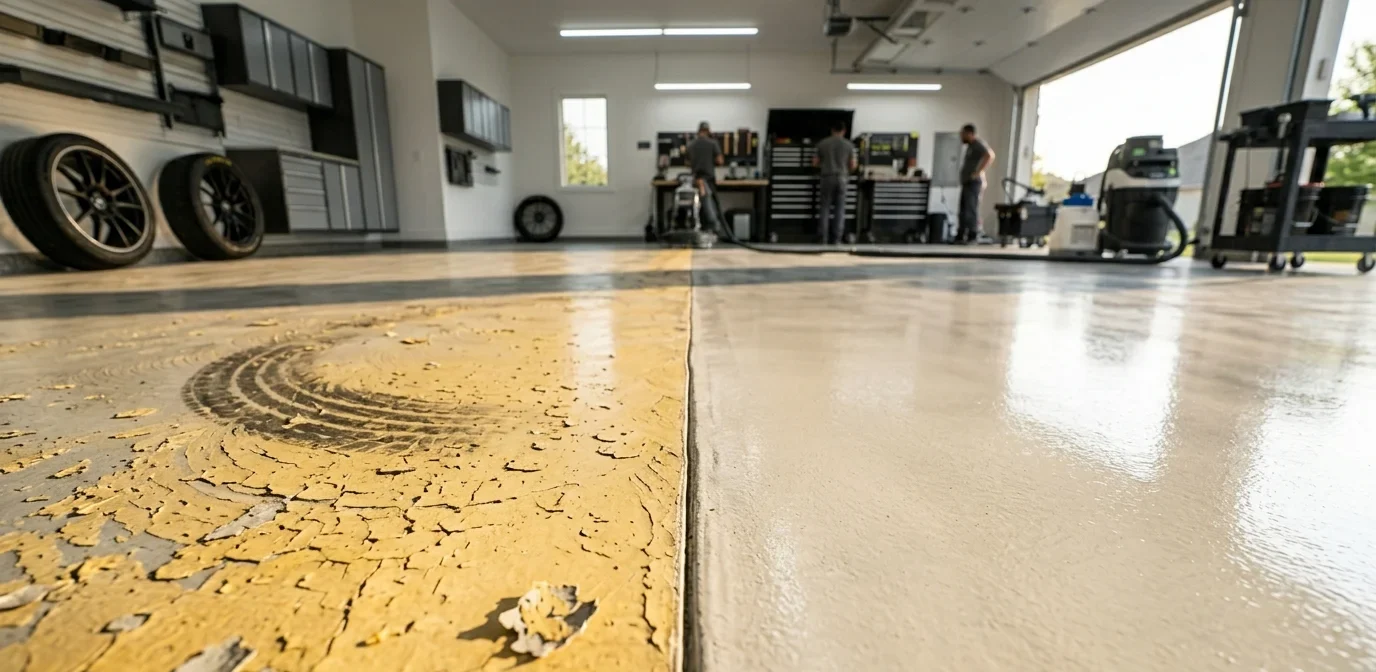
Some failures aren't about prep or moisture. They're chemistry, and the epoxy versus polyaspartic chemistry difference matters most in SW Florida. Standard aromatic epoxy isn't UV-stable. The UV degradation that causes yellowing also makes the coating brittle, and a brittle coating can't flex with the thermal cycling of a SW Florida slab swinging between cool mornings and 120°F+ surface temps. That stress accumulates until adhesion breaks all at once, producing the sudden peel after a year or two of looking fine.
What Fixing a Peeling Epoxy Floor Actually Looks Like
There's no lasting patch for a floor that failed from MVT, poor prep, or wrong chemistry. Filling lifted areas leaves the same moisture pushing up, and you're patching again within a year.
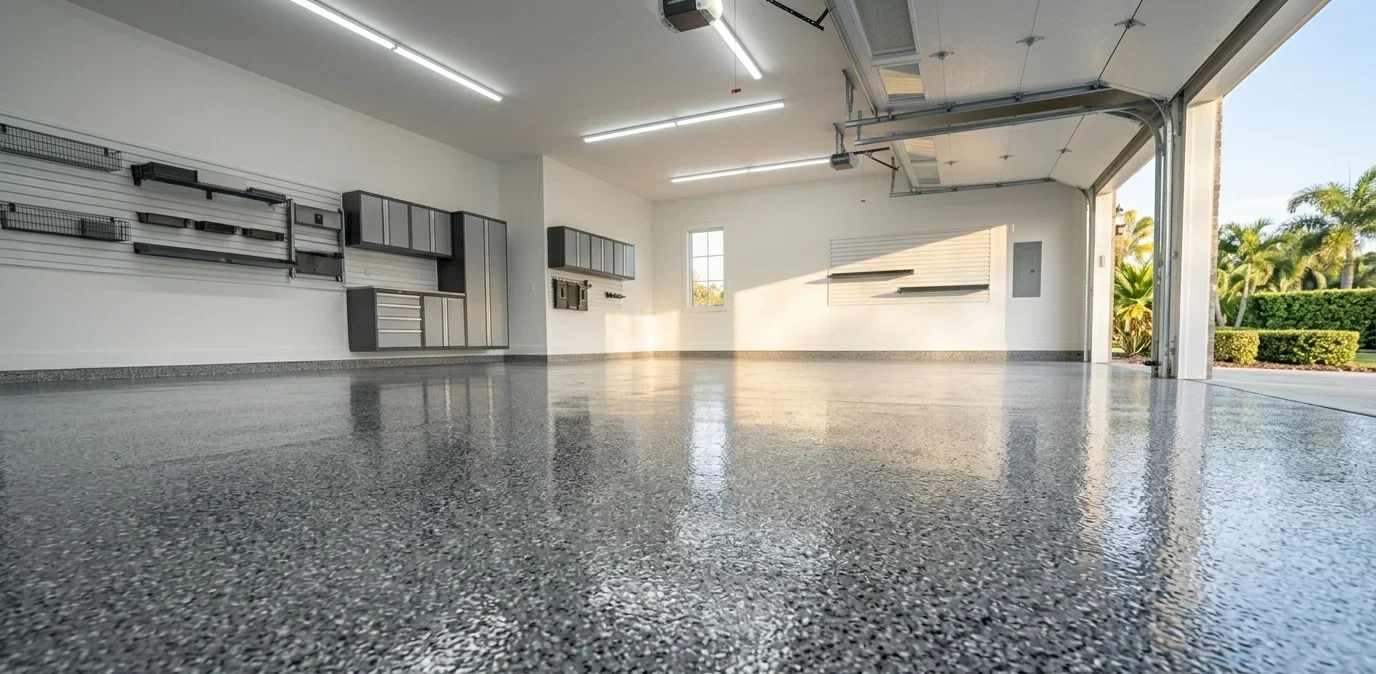
The fix is removal and replacement: grind off the failed coating, test for MVT, and install a system built for this climate. A professional polyaspartic floor coating tolerates higher MVT levels, resists UV degradation, and flexes through thermal cycling. It also cures the same day, with no multi-day humidity window that compromises epoxy as it cures.
Floor Shield of SWFL removes failed epoxy and installs the Floor Shield polyaspartic system. No patching. Every installation carries a 15-year non-prorated warranty: 100% coverage in year 15, same as year 1. Homeowners with peeling epoxy in Punta Gorda and across Charlotte County get a written quote at their free in-home consultations.
Frequently Asked Questions
Can I recoat my peeling epoxy floor instead of removing it?
Recoating over peeling epoxy fails for the same reason the original did: the underlying cause is still there. In most cases you get a short-term cosmetic fix that begins peeling again within months. Full removal and proper surface prep is the only path to a lasting result.
How do I know if moisture vapor transmission is the cause?
Look at the failure pattern. Blisters that ruptured before the coating lifted, or coating that separates cleanly without pulling any concrete with it, both point toward MVT. A calcium chloride test gives a definitive reading. Floor Shield of SWFL assesses concrete condition at every free consultation.
Does my garage need to be empty for the replacement?
Yes. Diamond grinding and coating require a fully cleared garage. The full process—removal, prep, and new polyaspartic installation—happens in one day. Move back in that evening and drive on the floor the next morning.
Time To Replace, Not Repair
A peeling epoxy floor signals the original installation was fighting the wrong battle. Patching buys time but doesn't change the outcome. The right answer is a system engineered for what SW Florida delivers.
Contact Floor Shield of SWFL at (941) 681-8407 today. Our team will assess what drove the failure and quote a replacement system that’s built to last.