
Garage floor paint, epoxy coatings, and polyaspartic coatings each protect concrete differently. Choosing the wrong one for Southwest Florida's UV exposure and heat cycles typically means recoating within a few years. Floor Shield of SWFL installs polyaspartic garage floor coatings in SW Florida and helps homeowners in Port Charlotte, Sarasota, and Punta Gorda understand what separates these options before they spend money on a coating that won't last in our climate.
A painted garage floor in Sarasota or Charlotte County, exposed to summer UV, humidity, and hot tires, has a realistic lifespan of two to five years. The cost isn't just dollars upfront; it's clearing the garage, waiting out cure windows, and watching a fresh floor fail. The right option isn't hard to identify once you know what each actually does.
What Separates Paint from a Coating
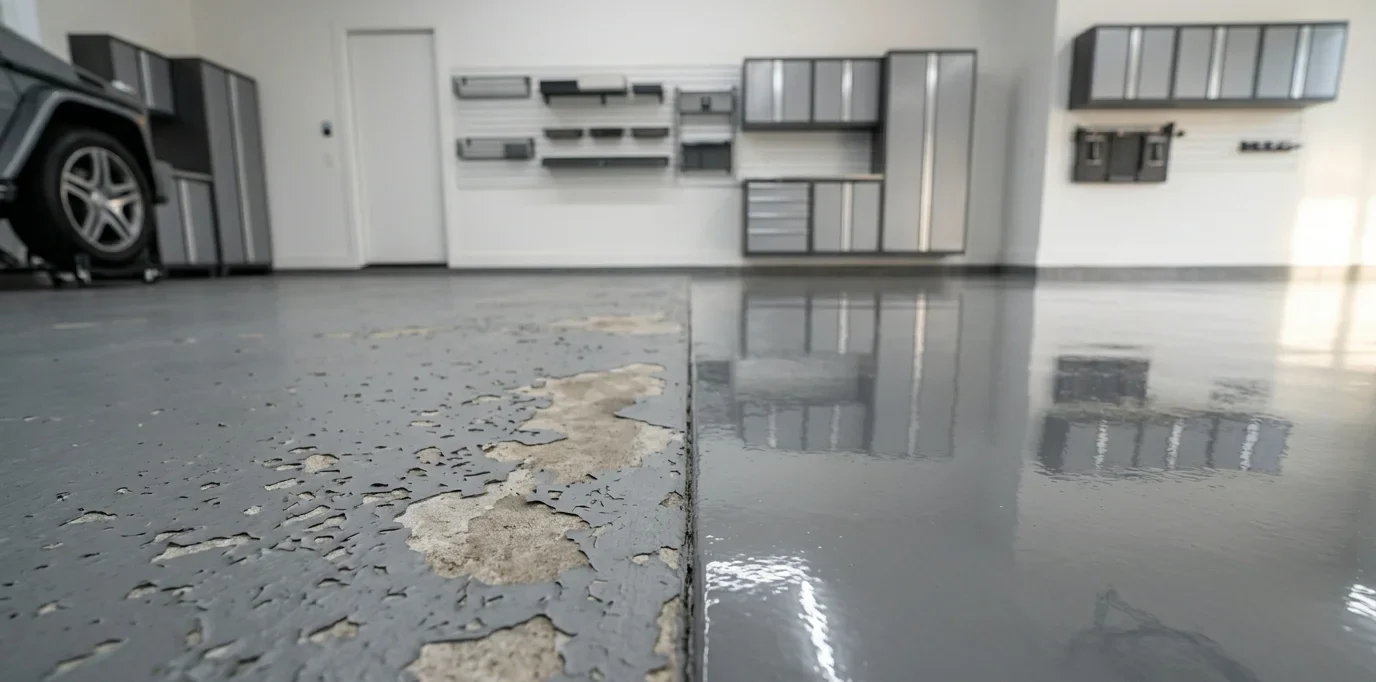
Garage floor paint is a surface film. It sits on top of the concrete without forming a chemical bond. It provides some cosmetic improvement but little durability. Under vehicle traffic and summer heat (surface temps regularly exceed 120°F on SW Florida slabs), paint breaks down fast. Expect reapplication every two to five years.
Two-part epoxy creates a genuine chemical bond with the concrete, resisting abrasion and chemicals far better than paint. The problem for SW Florida homeowners is what UV and heat do to it over time.
Why Epoxy Outperforms Paint but Still Falls Short
A properly installed 100% solids epoxy floor can last 10 to 20 years under ideal conditions and handles automotive fluid spills and foot traffic well.
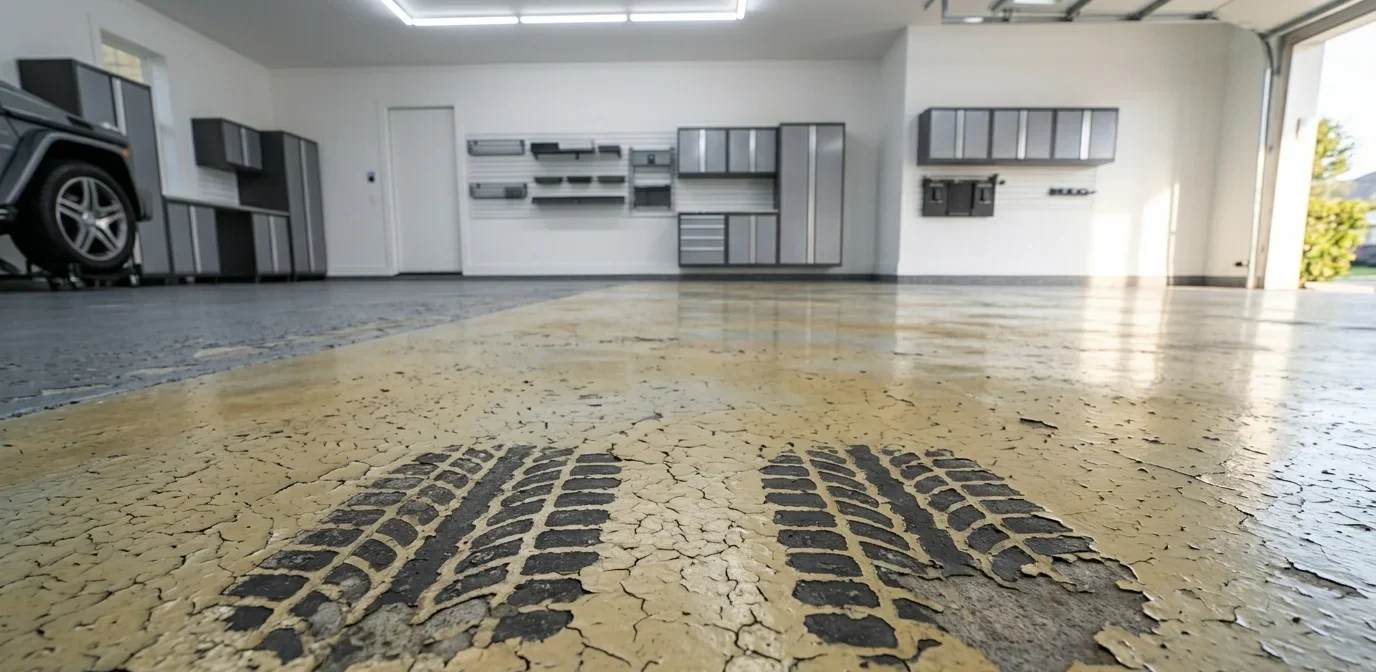
Standard epoxy absorbs UV and oxidizes. A light gray floor develops an amber cast within 6 to 18 months. That's not a defect, just what aromatic epoxy does under 300+ sunny days a year. Hot tire pickup is the second problem: Florida-road-heated tires soften epoxy, bond during cooling, and pull the coating away when the car leaves.
Those failure modes make the epoxy vs. polyaspartic garage floor comparison about physics, not brand preference. Floor Shield of SWFL’s 100% polyaspartic system avoids both, providing UV stability and hot-tire resistance designed for Charlotte County summers.
Polyaspartic: The Option Most Homeowners Don’t Know About
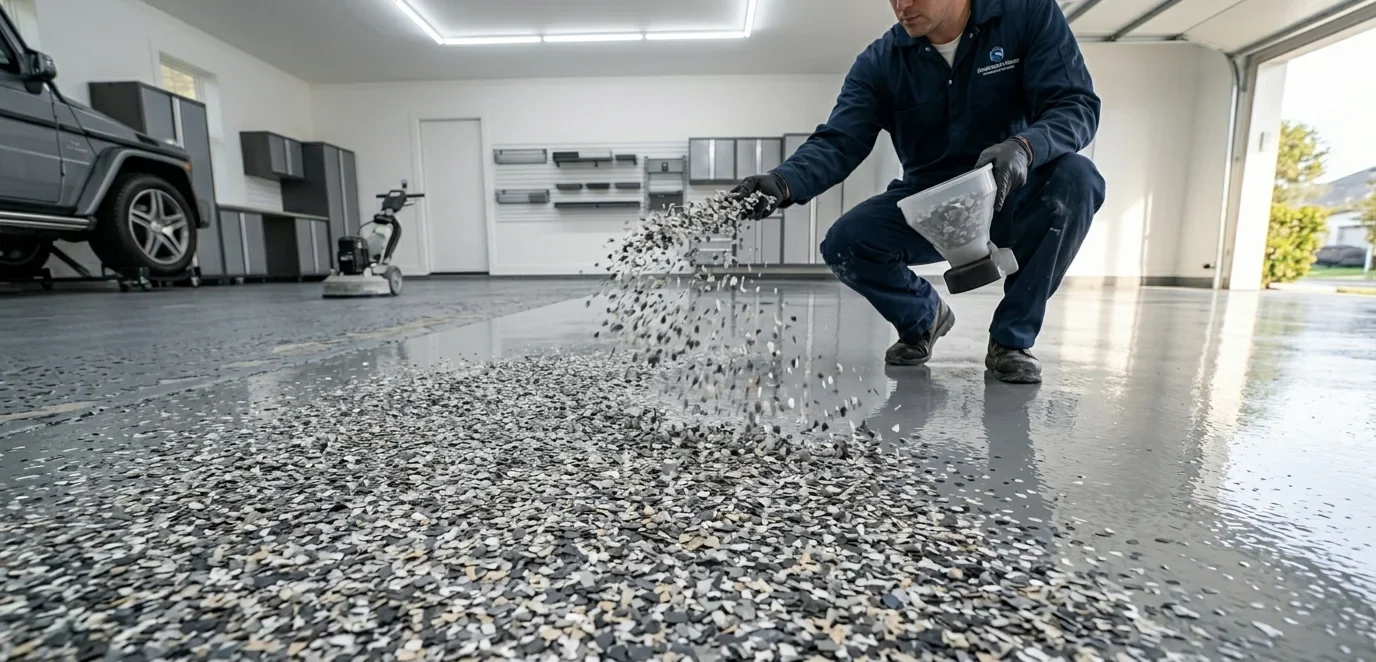
Polyaspartic addresses both of epoxy's primary failure modes. It's a type of polyurea: flexible, aliphatic, UV-resistant. It stays clear under sustained sun, moves with the concrete through thermal cycling, and cures in hours. A full installation (diamond grinding, base coat, flake, UV-stable topcoat) is finished on the same day, outperforming epoxy's 5- to 7-day cure window.
The professional polyaspartic systems Floor Shield of SWFL installs are 100% polyaspartic. There are no epoxy base layers. Hybrid systems inherit epoxy's failure modes at the bottom layer, where adhesion problems originate.
Choosing the Right Option for a SW Florida Garage
Paint suits a budget-limited project. Expect to recoat in two to five years. For regular vehicle use in Charlotte or Sarasota County, that timeline typically disappoints.
Epoxy is capable in cooler, lower-UV environments. In SW Florida, UV degradation, thermal cycling, and hot tire conditions shorten its effective lifespan below what manufacturers quote.
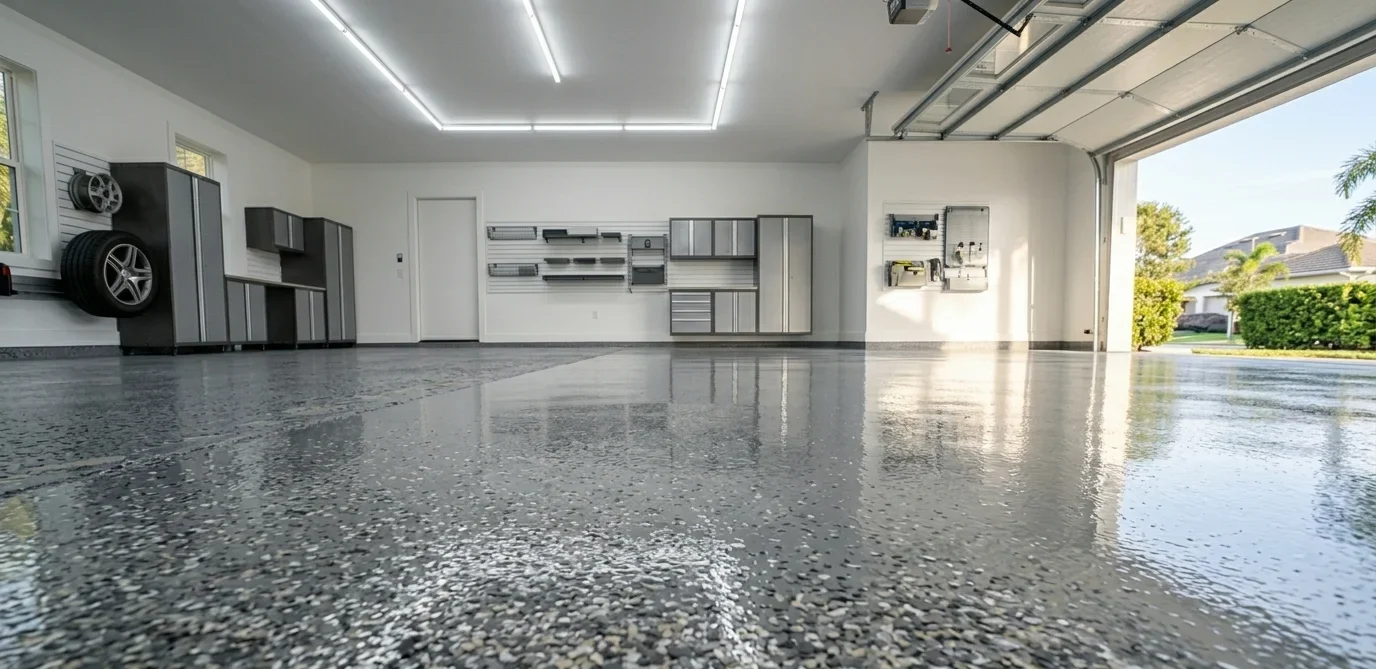
Polyaspartic costs more upfront, but it withstands the conditions that cause paint and epoxy to fail. Floor Shield of SWFL backs every installation with a 15-year non-prorated warranty that doesn't shrink over time: same 100% coverage in year 15 as day one. Free in-home consultations across Venice, Sarasota, and Manatee County include a written quote at the visit, with GreenSky financing available.
Frequently Asked Questions
How long does garage floor paint last in Florida compared to epoxy?
Garage floor paint lasts two to five years before reapplication. Two-part epoxy can last 10 to 20 years under ideal conditions, but UV degradation and hot tire pickup shorten that timeline in SW Florida. Polyaspartic outperforms both on UV resistance and thermal flexibility in this climate.
Is garage floor paint worth it as a temporary fix before a real coating?
Paint can work as a short-term cosmetic fix if a full system isn't in the budget yet. The risk: oil and chemical stains penetrate paint and contaminate the concrete, complicating prep later. Leaving bare, clean concrete is often the better holding strategy if a proper coating is coming within a year or two.
Does Floor Shield of SWFL install epoxy systems?
Floor Shield of SWFL installs 100% polyaspartic, no epoxy. Scott Vaartjes explains the distinction at every free consultation so homeowners understand what they're getting and why polyaspartic was chosen for SW Florida's heat and UV environment.
Polyaspartic: The Solution That’s Worth Your Money
Paint is a starting point. Epoxy performs well in the right conditions. Polyaspartic is built for what SW Florida delivers. The gap between them isn't just price. It's the number of times you clear your garage and start over.
Contact the Floor Shield SWFL team at (941) 681-8407 to schedule a free consultation.