
Caring for an epoxy garage floor is a relatively straightforward process, requiring just a soft-bristle broom for daily dust removal and a pH-neutral cleaner mixed with warm water for weekly mopping. To protect the finish over the long term, avoid abrasive pads, vinegar, and citrus-based products, which can dull the surface over time. At Floor Shield of SWFL, we routinely give homeowners advice on how to care for their garage floor coatings.
Whether you’re caring for a garage floor in Port Charlotte or a neighboring community, a few simple habits will keep your investment looking pristine. Ahead, we will cover the basic daily sweeps, simple spot treatments, and seasonal steps that keep a coated floor in top shape.
Daily and Weekly Cleaning
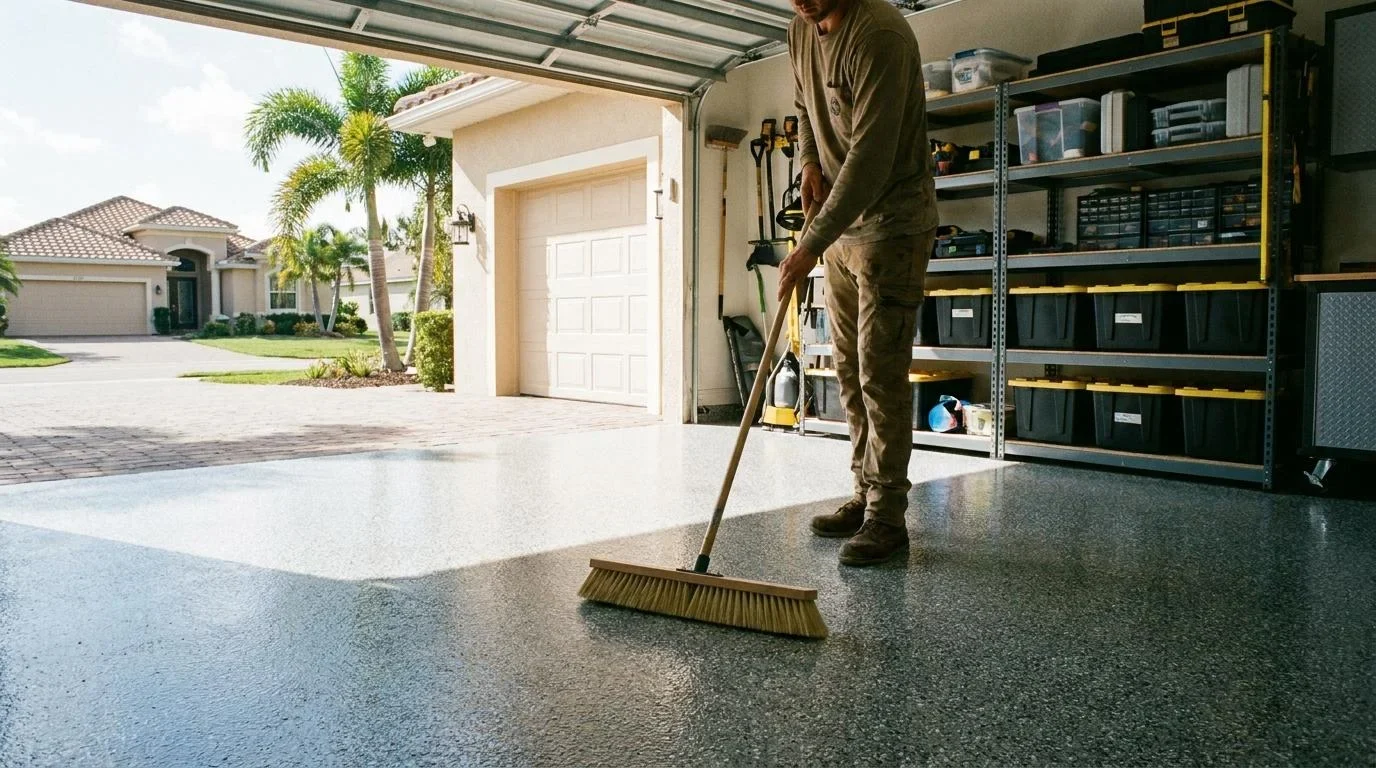
To protect your garage floor investment and keep your floor looking its best, consistent maintenance is essential.
Daily: Sweep or Dust Mop
Use a soft-bristle push broom or microfiber dust mop to clear sand, grit, and debris every day the garage sees use. Southwest Florida's sandy soil tracks in quickly, and fine grit acts like sandpaper under foot and tire traffic. Removing it daily prevents micro-scratches that dull the surface over months.
Weekly: Mop With pH-Neutral Cleaner
Mix a few drops of pH-neutral floor cleaner or plain dish soap in a bucket of warm water. Mop the entire floor with a soft flat mop, rinse with clean water, and let it air dry. Do not use vinegar, ammonia, citrus cleaners, or anything labeled 'degreaser' for routine cleaning because they degrade the epoxy's topcoat over time. Epoxy's chemical resistance handles most spills, but harsh cleaning agents work against the coating rather than protecting it.
Stain and Spill Removal
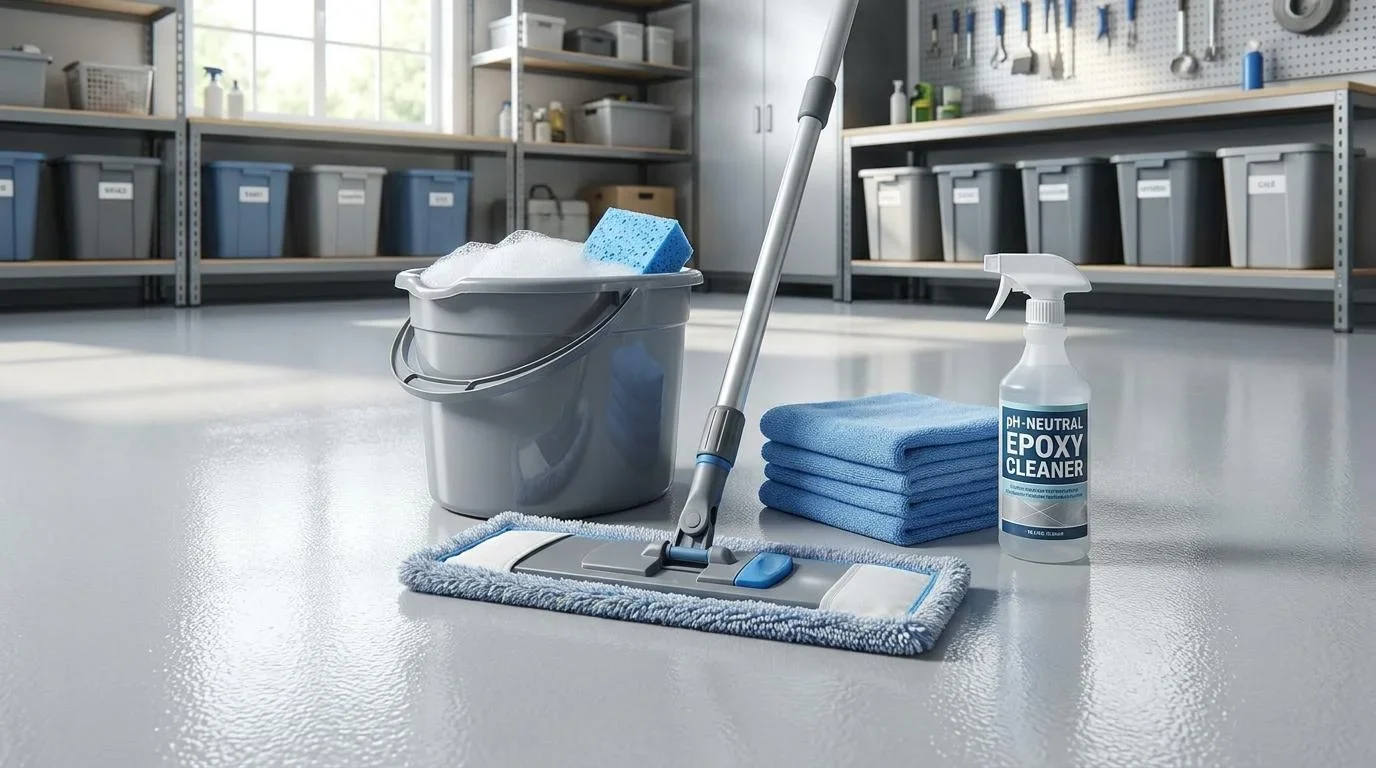
Handling common garage spills quickly and correctly is the secret to maintaining your floor's flawless finish.
Automotive Fluids
Wipe up oil, brake fluid, coolant, and gasoline immediately with a paper towel or shop rag. For dried stains, apply a small amount of pH-neutral cleaner directly to the spot, let it sit for two to three minutes, and scrub gently with a soft nylon brush. Never use steel wool or abrasive scouring pads on an epoxy surface.
Tire Marks
Hot tire marks are common in Florida garages. Soak a rag in warm soapy water, lay it over the mark for five minutes, then wipe clean. For stubborn marks, a melamine foam pad (like a Magic Eraser) works without scratching the coating. If hot tire marks keep reappearing, the coating may be softening under heat, which is a sign of the heat damage that limits epoxy lifespan in Florida conditions.
Seasonal Deep Cleaning for Florida Garages
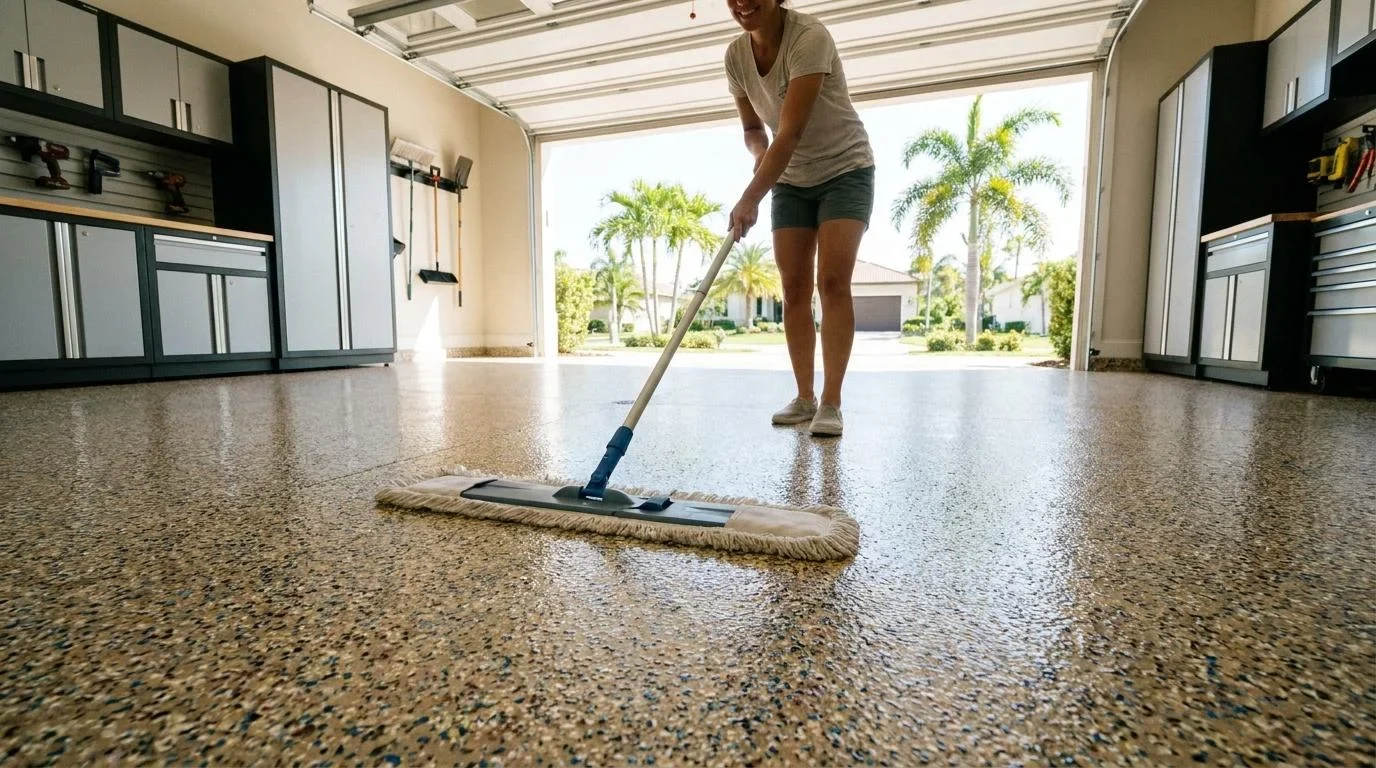
Southwest Florida's rainy season (June through November) drives humidity into every garage, and mold and mildew can establish themselves on coated surfaces within weeks if moisture sits. Run a seasonal deep clean at the start and end of storm season.
Rinse the entire floor with a garden hose. Apply a diluted bleach solution (one cup per gallon of water) to any areas showing mildew spots. Let it sit for ten minutes, scrub with a soft brush, and rinse thoroughly. Homeowners in Punta Gorda and Charlotte County deal with this frequently because afternoon storm runoff pushes moisture and organic debris into attached garages. Running a fan or portable dehumidifier for a few hours after each deep clean helps the floor dry completely and prevents mildew from returning.
Frequently Asked Questions
What is the best cleaner for an epoxy garage floor?
The best cleaner for an epoxy garage floor is a pH-neutral floor cleaner mixed with warm water. Plain dish soap at a ratio of a few drops per gallon also works well for routine mopping. Avoid vinegar, citrus-based products, and commercial degreasers because their acidic or alkaline chemistry degrades the epoxy topcoat with repeated use.
Can you pressure wash an epoxy garage floor?
You can pressure wash an epoxy garage floor if you keep the pressure below 1,500 PSI and use a wide-angle tip. Higher pressure risks lifting the coating at edges, seams, or any area where adhesion has weakened. For most routine cleaning, a garden hose with a spray nozzle provides enough force without the risk. Floor Shield of SWFL recommends garden-hose rinsing for regular maintenance.
How often should you deep clean an epoxy garage floor in Florida?
An epoxy garage floor in Florida should get a deep clean at least twice per year, timed to the start and end of the rainy season in June and November. Humidity and storm runoff accelerate mold and mildew growth on coated surfaces. Adding one mid-summer deep clean during peak humidity months further protects the coating's appearance and adhesion.
Keep Your Floor Looking New
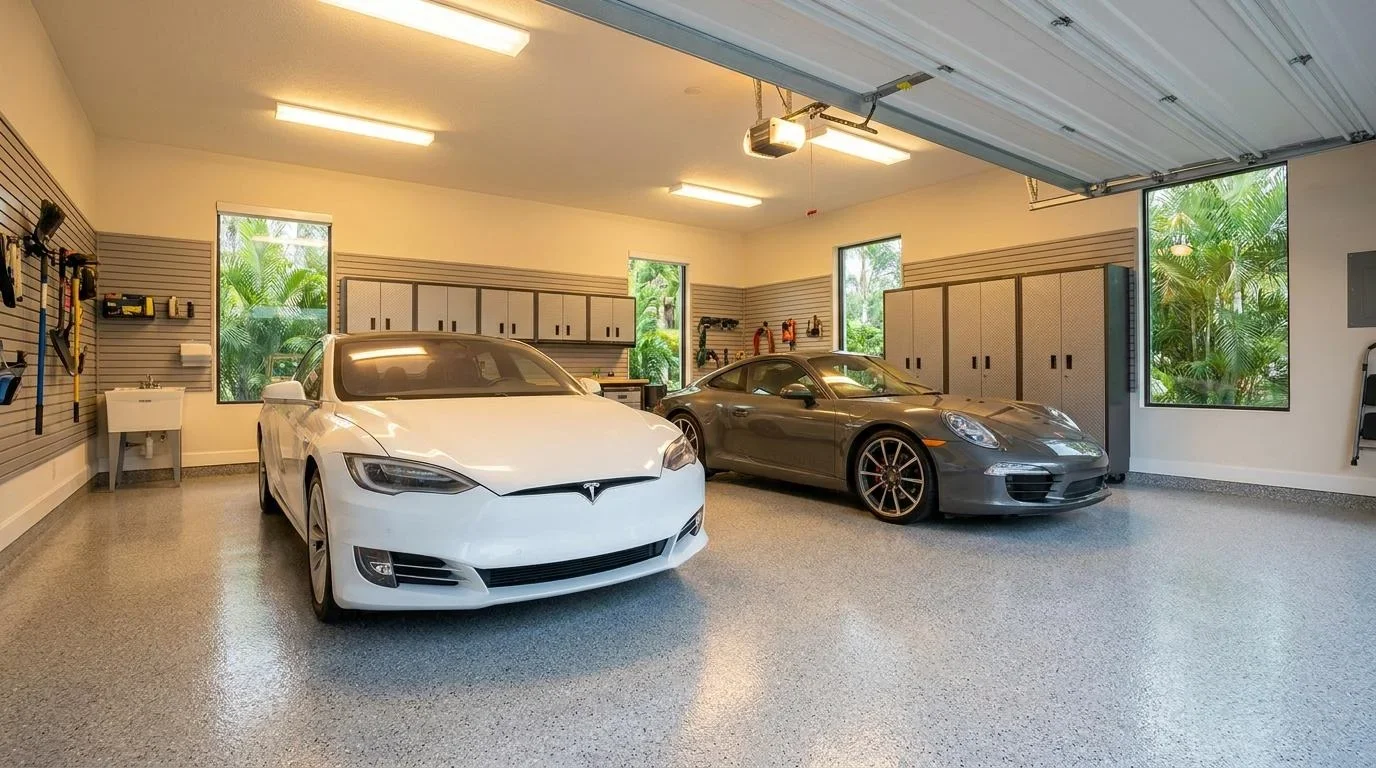
Because both epoxy and polyaspartic coatings create completely non-porous surfaces, keeping them clean requires very little effort. A quick daily sweep and a weekly damp mop takes just a few minutes each week. That regular upkeep, along with a quick deep clean at the start and end of the rainy season, easily extends the life of either system and keeps your floor looking brand new.
While both options are equally easy to wash, polyaspartic coatings offer the added benefit of permanent UV stability, ensuring the surface maintains its original color without yellowing under the Florida sun. Because of this long-term durability, our team at Floor Shield of SWFL exclusively installs single-day polyaspartic coatings rather than traditional epoxy.
If you’re trying to decide which coating system fits your garage, your budget, and your long-term expectations, our team at Floor Shield of SWFL is ready to help. Reach out to us at (941) 681-8407 to chat about your project and request your free estimate today.