
The best pool deck coating for Southwest Florida combines UV stability, slip resistance, and the flexibility to handle concrete expansion in sustained heat. Acrylic cool-deck overlays, epoxy, and polyaspartic systems each offer a different approach to those demands. Floor Shield of SWFL installs polyaspartic pool deck coating systems engineered for barefoot safety and full sun exposure across Charlotte, Sarasota, and Manatee Counties.
Picture a Saturday afternoon in Port Charlotte: the pool deck surface reads 160°F in direct sun, a summer storm rolls through and soaks everything in ten minutes, and an hour later the concrete is baking again. That cycle repeats from May through October, and it punishes coatings that weren’t built for it. Each coating chemistry responds differently to that stress, and the gap between the best and worst option shows up within the first year of Florida weather.
Common Pool Deck Coating Types
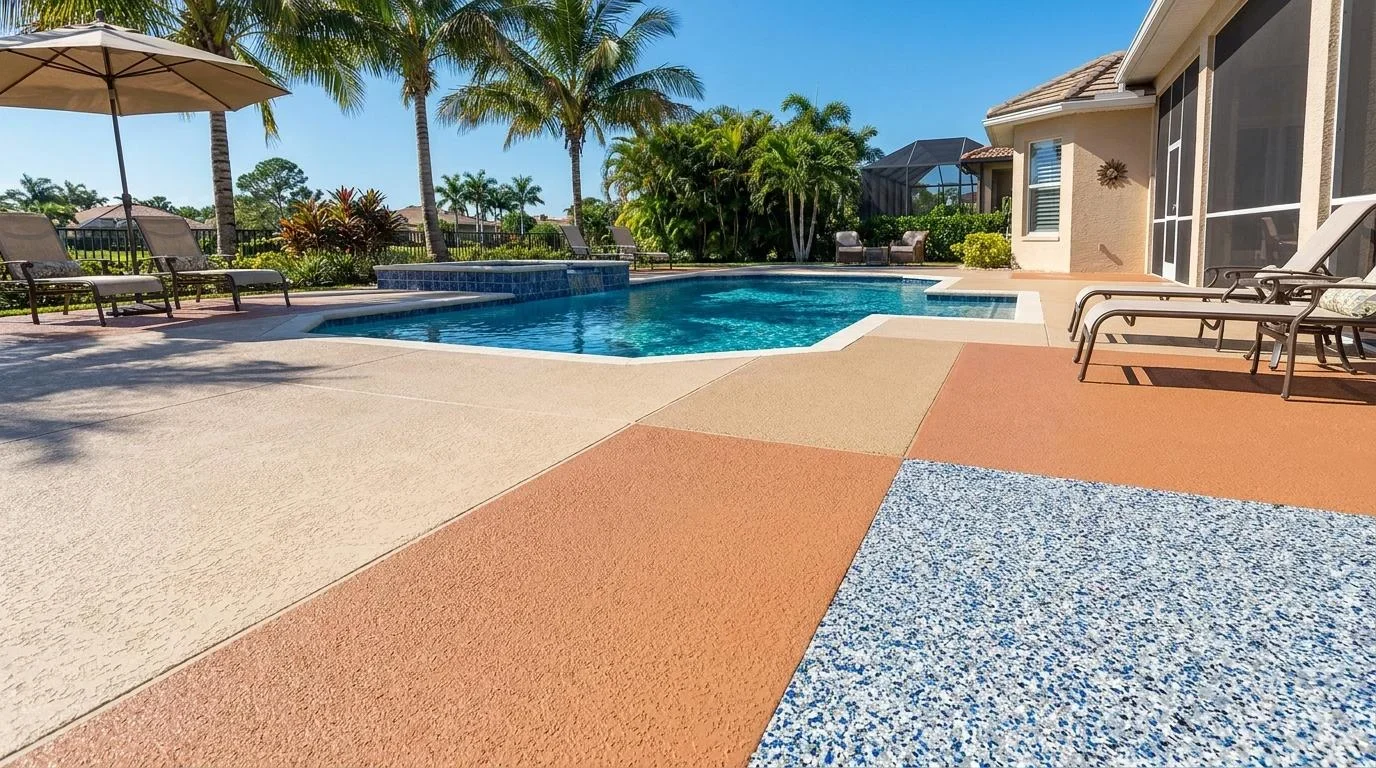
Three primary coating chemistries dominate the market, each offering a distinct profile in terms of durability, flexibility, and UV resistance.
Acrylic Cool-Deck Overlays
Acrylic overlays apply a thin textured layer over existing concrete and reduce surface temperature by reflecting sunlight. The texture provides barefoot grip when dry, and the coating stays cooler than uncoated concrete by 10 to 15 degrees. The trade-off is durability: acrylic coatings typically wear through in high-traffic areas within two to four years in Florida conditions and require recoating to maintain both appearance and slip resistance. Color fading from UV exposure is common by the second summer.
Epoxy Coatings
Epoxy creates a hard, chemical-resistant surface that accepts decorative flake and color options. On a pool deck, however, the trade-offs that affect epoxy in garages multiply outdoors. UV yellowing progresses faster under direct sun, and epoxy's rigid cure makes it prone to cracking as concrete expands and contracts through Florida's daily temperature swings. Slip resistance depends on broadcast aggregate added during installation because the cured epoxy surface itself is smooth and slippery when wet.
Polyaspartic Coatings
Polyaspartic systems use aliphatic resin chemistry that resists UV degradation without additives or topcoat refreshes. The coating remains flexible after curing, which allows it to move with concrete through thermal expansion cycles without cracking or delaminating. Floor Shield's polyaspartic pool deck system includes anti-slip aggregate broadcast into the topcoat for wet-surface traction. The system cures in hours rather than days, which reduces the window where rain, debris, or humidity can compromise the finish.
What Makes a Pool Deck Coating Work in Florida?
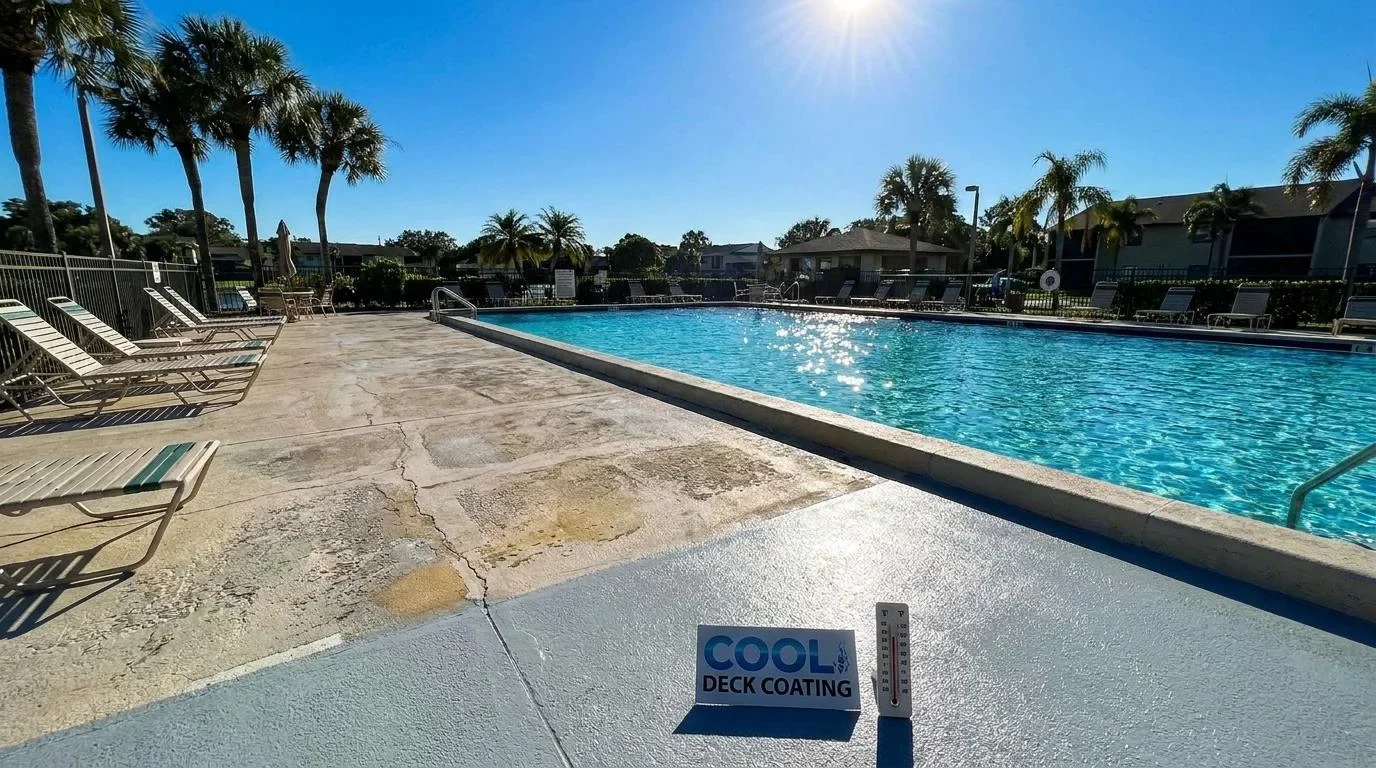
A reliable pool deck coating needs to survive the intense UV exposure, extreme thermal expansion, and constant moisture that characterizes Southwest Florida weather.
UV and Heat Resistance
Southwest Florida's UV index sits in the extreme range for most of the year. Any coating that uses aromatic resin chemistry will yellow, chalk, or degrade under that exposure. Polyaspartic's aliphatic structure handles sustained UV without color shift, which is why it outperforms both acrylic and epoxy on surfaces that face the sun all day. The long-term cost comparison across coating types favors polyaspartic when recoating cycles are factored in.
Slip Resistance When Wet
A pool deck is wet more often than it is dry. Any coating system that relies solely on surface texture for grip loses effectiveness as that texture wears down. Broadcast aggregate embedded in the topcoat during installation provides consistent slip resistance that does not wear away with foot traffic. Floor Shield's system uses aluminum oxide aggregate sized for barefoot comfort and wet traction.
Flexibility and Crack Resistance
Concrete pool decks in Lakewood Ranch and Charlotte County expand and contract significantly as surface temperatures swing from morning lows to afternoon highs exceeding 150°F. Rigid coatings like epoxy can’t flex with that movement, so they crack at joints and stress points. Polyaspartic maintains enough flexibility after cure to absorb thermal movement without fracturing, which eliminates the most common coating failure on Florida pool decks.
Frequently Asked Questions
What is the best coating for a pool deck in Florida?
The best coating for a pool deck in Florida is a polyaspartic system with broadcast anti-slip aggregate. Polyaspartic resists UV yellowing, flexes with concrete thermal expansion, and cures in hours so the deck returns to service the same day. Acrylic overlays reduce surface temperature but wear through quickly, and epoxy yellows and cracks under sustained Florida sun and heat.
How long does a pool deck coating last in Southwest Florida?
A professionally installed polyaspartic pool deck coating lasts 15 years or more in Southwest Florida with routine cleaning. Acrylic cool-deck overlays typically need recoating every two to four years. Epoxy on outdoor pool decks often shows UV damage and cracking within the first year of full sun exposure. Floor Shield of SWFL backs every polyaspartic pool deck installation with a 15-year non-prorated warranty.
Is pool deck coating slippery when wet?
Pool deck coating can be slippery when wet if no anti-slip aggregate is added during installation. A smooth epoxy or polyaspartic surface without aggregate provides minimal wet traction. Professional installations broadcast aluminum oxide or similar aggregate into the topcoat to create a textured surface that maintains grip when wet. Floor Shield includes anti-slip aggregate in every pool deck coating system.
Choose the Right Pool Deck Finish
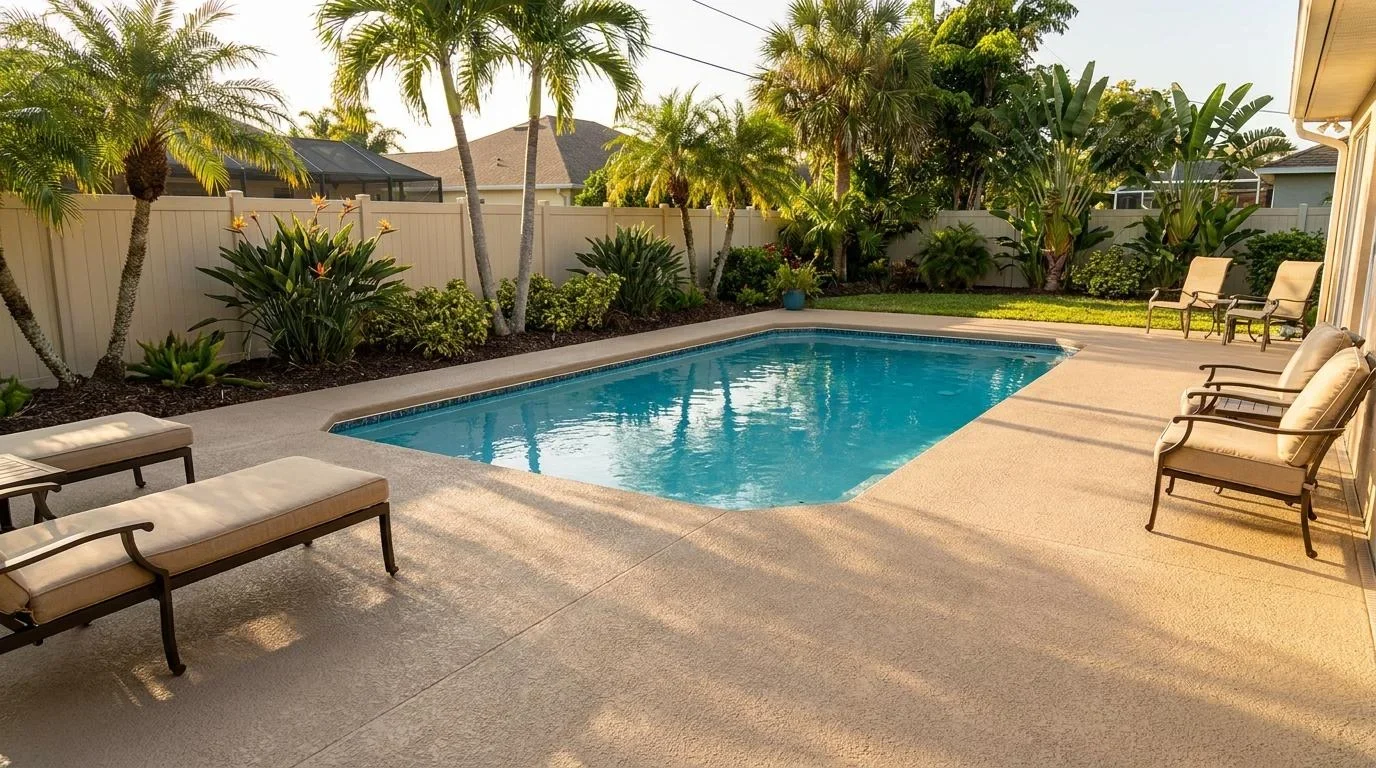
The coating that works on a garage floor doesn’t automatically work on a pool deck. Outdoor exposure, standing water, barefoot traffic, and daily thermal cycling demand a system built for those conditions. Polyaspartic handles all four without the recoating cycles that acrylic requires or the UV failures that damage standard epoxy.
Request a free estimate from Floor Shield of SWFL at (941) 681-8407 to find the right pool deck coating for your home.