
Epoxy floor cracking results from thermal cycling, inadequate surface preparation, or the coating's inability to flex with concrete’s movement. In Southwest Florida, daily temperature swings of 30 to 40 degrees push concrete through expansion and contraction cycles that rigid epoxy struggles to absorb. Across Charlotte, Sarasota, and Manatee counties, Floor Shield of SWFL replaces cracking epoxy with flexible polyaspartic floor coatings that move with the slab.
A cracked epoxy floor isn’t just a cosmetic problem. Every crack exposes bare concrete to moisture, chemicals, and tire traffic that accelerate further damage. Left unaddressed, small hairline cracks become widely delaminated as the entire coating lifts away from the slab. Understanding why the cracking started determines whether a repair holds or the same failure repeats. Three common causes in Southwest Florida each point to a different part of the coating system.
Common Causes of Epoxy Floor Cracking
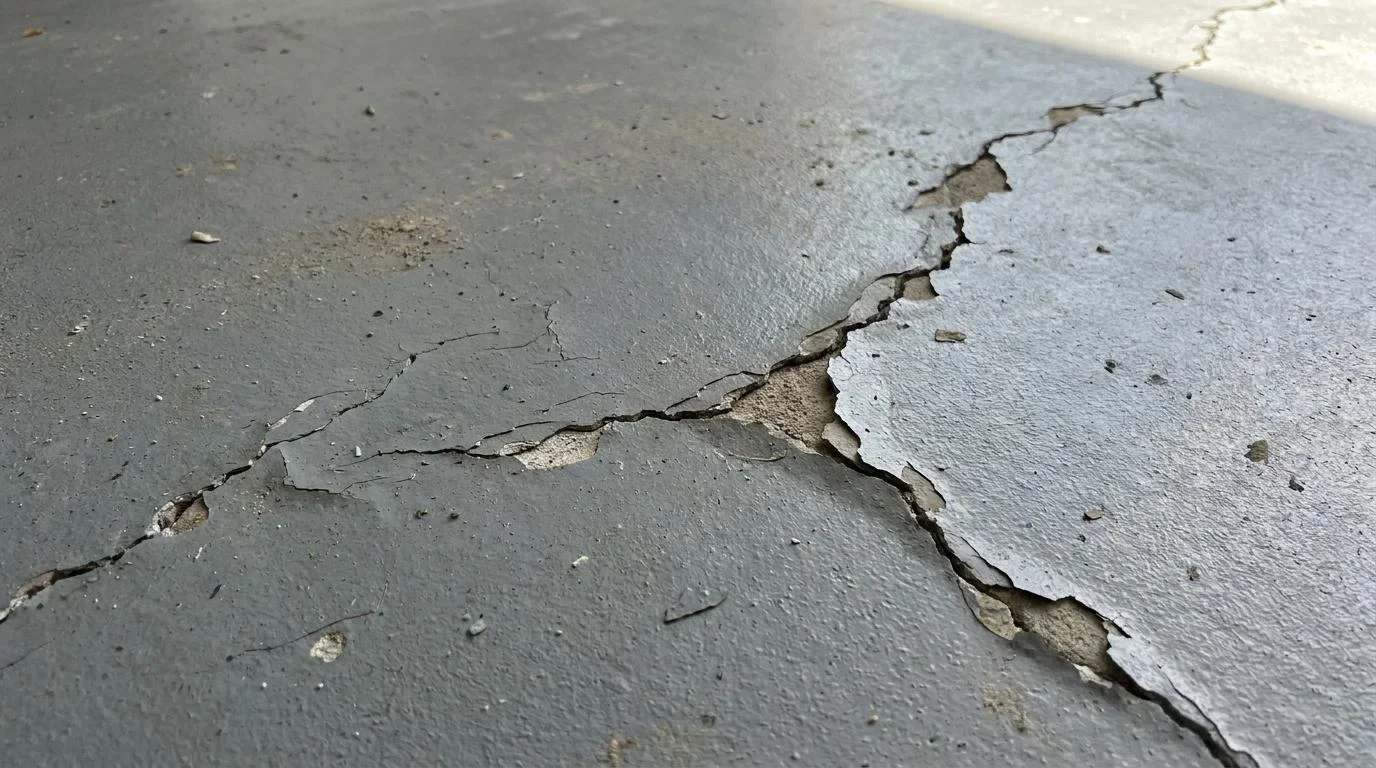
The failure of a rigid epoxy system in Southwest Florida is typically due to three factors that prevent the coating from maintaining a lasting bond with the concrete slab.
Thermal Cycling and Concrete Movement
Concrete expands when heated and contracts when cooled. In Southwest Florida, garage floor surface temperatures can swing from 75°F in the early morning to over 140°F by mid-afternoon when the sun hits through an open door. That daily expansion and contraction cycle stresses any rigid coating bonded to the surface. Epoxy cures to a hard, inflexible film that cannot stretch with the concrete, so it cracks at the weakest points: control joints, cold joints, and areas where the slab thickness changes.
Inadequate Surface Preparation
Epoxy bonds mechanically to concrete, which means the strength of the bond depends on the surface profile created during preparation. Diamond grinding opens the pores of the concrete and creates a rough texture that locks the coating in place. Acid etching, the shortcut used in most DIY kits, produces a weaker and less consistent profile. When the bond is weak, thermal stress and moisture pressure crack and lift the coating at the interface between the epoxy and the concrete rather than within the concrete itself.
Moisture Vapor Transmission
In Punta Gorda and Charlotte County, where water tables sit especially close to the surface, older slabs without moisture mitigation show this delamination pattern most often.
Why Cracking Shortens Epoxy Lifespan
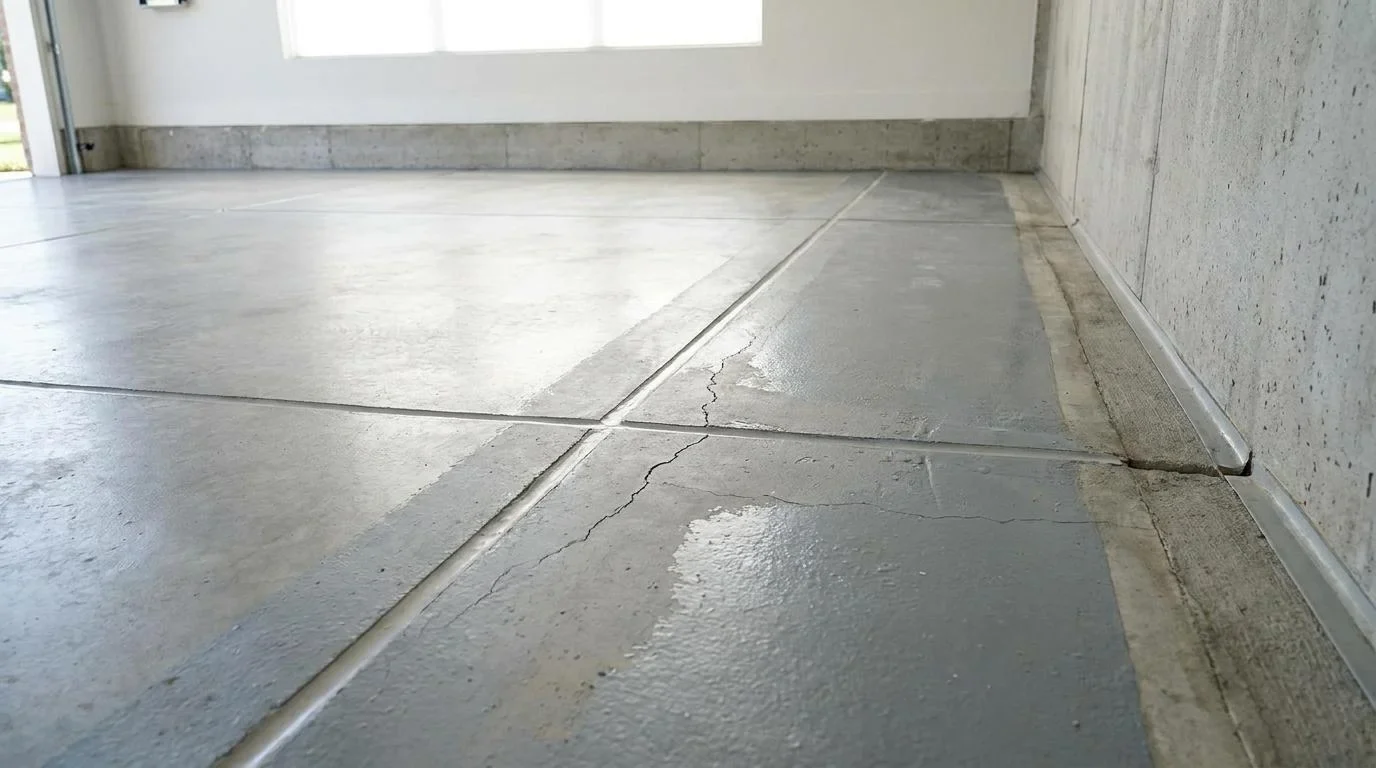
Every crack in an epoxy floor creates a path for water, oil, and chemicals to reach the concrete underneath. Moisture entering through cracks accelerates the delamination cycle because it attacks the bond from both sides: hydrostatic pressure pushes up from below while surface water seeps down through the crack. The expected lifespan of an epoxy garage floor drops significantly once cracking begins because the damage compounds with each thermal cycle and each exposure to moisture.
Patching cracked epoxy with more epoxy rarely produces a lasting result. The new material bonds to the old coating rather than to fresh concrete, and the same rigidity that caused the original crack remains in the repair. Without addressing the root cause, cracks reappear in the same locations within one to two seasons.
How Polyaspartic Prevents Cracking
Flexible Cure Chemistry
Polyaspartic coatings retain flexibility after curing, which allows them to expand and contract with the concrete through daily temperature swings. Where epoxy resists the movement and fractures, polyaspartic absorbs the stress without cracking. This flexibility is built into the resin chemistry, not achieved through plasticizers or additives that break down over time.
Moisture-Mitigating Primer
Floor Shield's polyaspartic system begins with a moisture-mitigating primer that bonds to the concrete and creates a vapor-tolerant barrier. This primer accommodates the moisture vapor transmission rates common in Southwest Florida slabs without building the hydrostatic pressure that lifts rigid coatings. The routine maintenance for coated garage floors stays simple because the system's foundation prevents the moisture-driven failures that demand costly repairs.
Diamond Grinding for Mechanical Bond
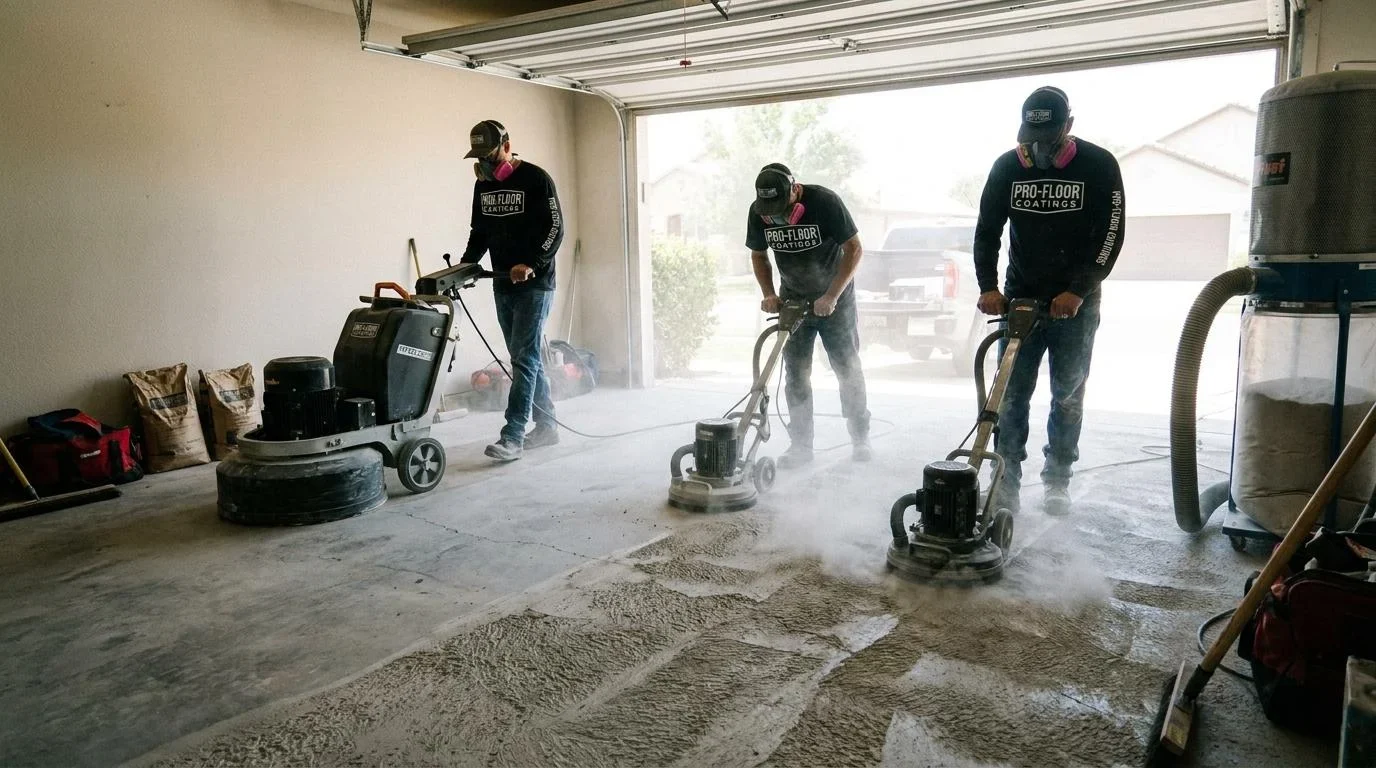
Every Floor Shield installation starts with diamond grinding to create a concrete surface profile that maximizes mechanical adhesion. This step removes laitance, contaminants, and any previous coating residue. The result is a bond strong enough to withstand thousands of thermal cycles without cracking or delaminating at the interface.
Frequently Asked Questions
Can you fix cracked epoxy flooring?
Cracked epoxy flooring can be repaired, but patching epoxy over epoxy does not address the underlying cause. If cracking resulted from thermal stress or moisture vapor, the same failure will repeat. A lasting fix requires removing the damaged coating, grinding the concrete to a fresh profile, addressing any moisture issues, and applying a flexible system like polyaspartic garage floor coatings that can absorb concrete movement without fracturing.
Why is my new epoxy floor already cracking?
A new epoxy floor that cracks within the first year typically failed because of inadequate surface preparation, application over a moisture-active slab without a vapor barrier, or installation during temperature conditions that prevented proper cure. In Southwest Florida, all three factors are common. Acid-etched surfaces, high water tables, and humid application conditions each create conditions where epoxy can’t form or maintain the bond it needs to survive thermal cycling.
Does polyaspartic crack like epoxy?
Polyaspartic does not crack like epoxy because it cures to a flexible film that moves with concrete expansion and contraction. Epoxy cures rigid and fractures when the concrete shifts beneath it. Floor Shield of SWFL's polyaspartic system also includes a moisture-mitigating primer that prevents the hydrostatic pressure buildup responsible for delamination-related cracking on Florida slabs.
Get the Flexible, Flawless Floor Your Garage Deserves
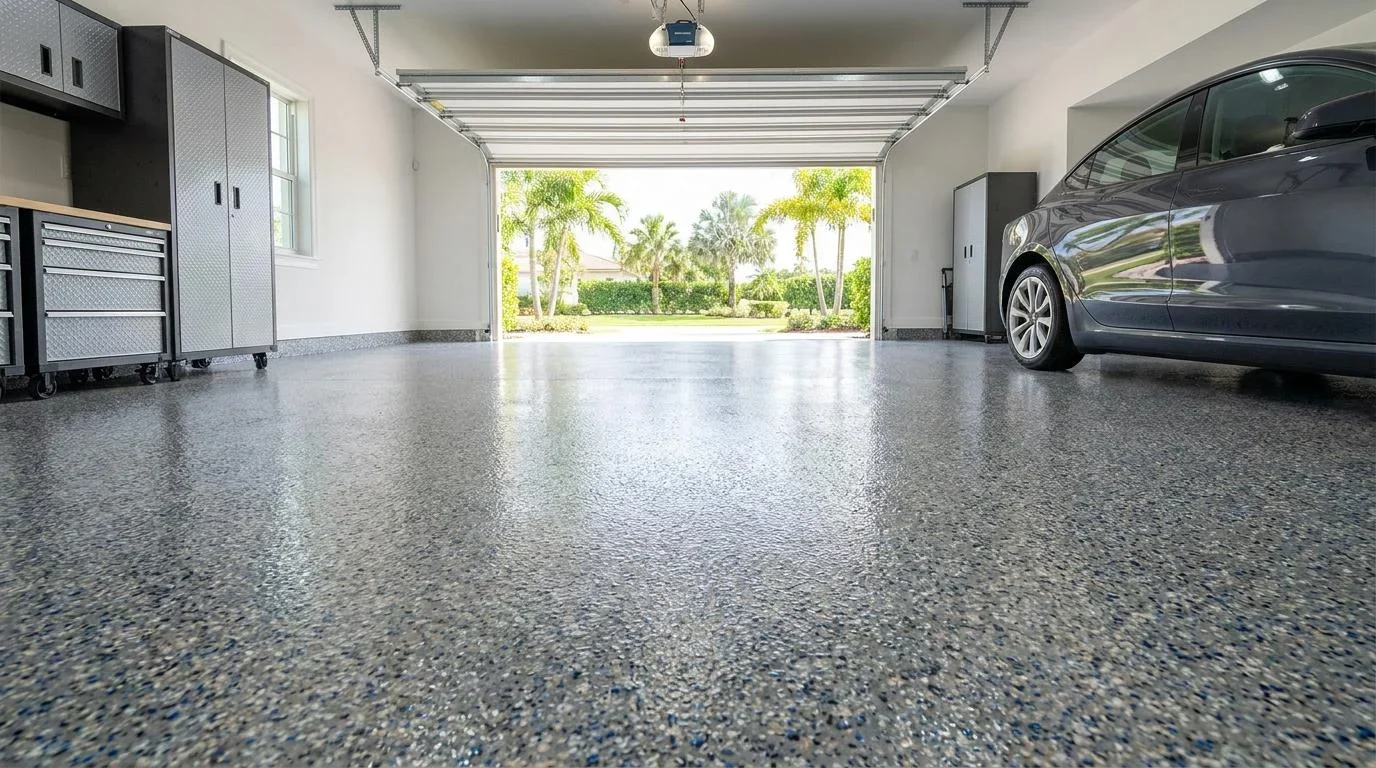
Epoxy cracks in Florida because its rigid chemistry can’t handle the thermal cycling, moisture pressure, and concrete movement that define this climate. Polyaspartic was designed around those exact conditions: flexible cure, UV-stable resin, and a primer system that manages moisture from day one. The result is a garage floor that stays intact through years of Southwest Florida weather instead of cracking apart within the first few seasons.
Request a free estimate from Floor Shield of SWFL at (941) 681-8407 to replace a cracking epoxy floor or a new system that won't crack in the first place.