
The yellowing of an epoxy floor is caused by ultraviolet light breaking down the resin's chemical bonds—not by dirt, chemical spills, or poor cleaning habits. In Southwest Florida, this visible amber discoloration routinely appears within six to twelve months of installation. From coastal properties in Nokomis out across Sarasota, Charlotte, and Manatee counties, Floor Shield of SWFL helps homeowners avoid this frustration by installing premium single-day polyaspartic coatings specifically engineered for extreme UV climates.
Most homeowners assume that a yellowing floor is just dirty or wearing out, but no amount of scrubbing can reverse a permanent chemical reaction. In this article, we break down exactly how Florida's intense sunlight triggers this degradation, how our regional climate accelerates the damage, and the precise resin chemistry that stops discoloration before it ever starts.
What Causes Epoxy to Yellow
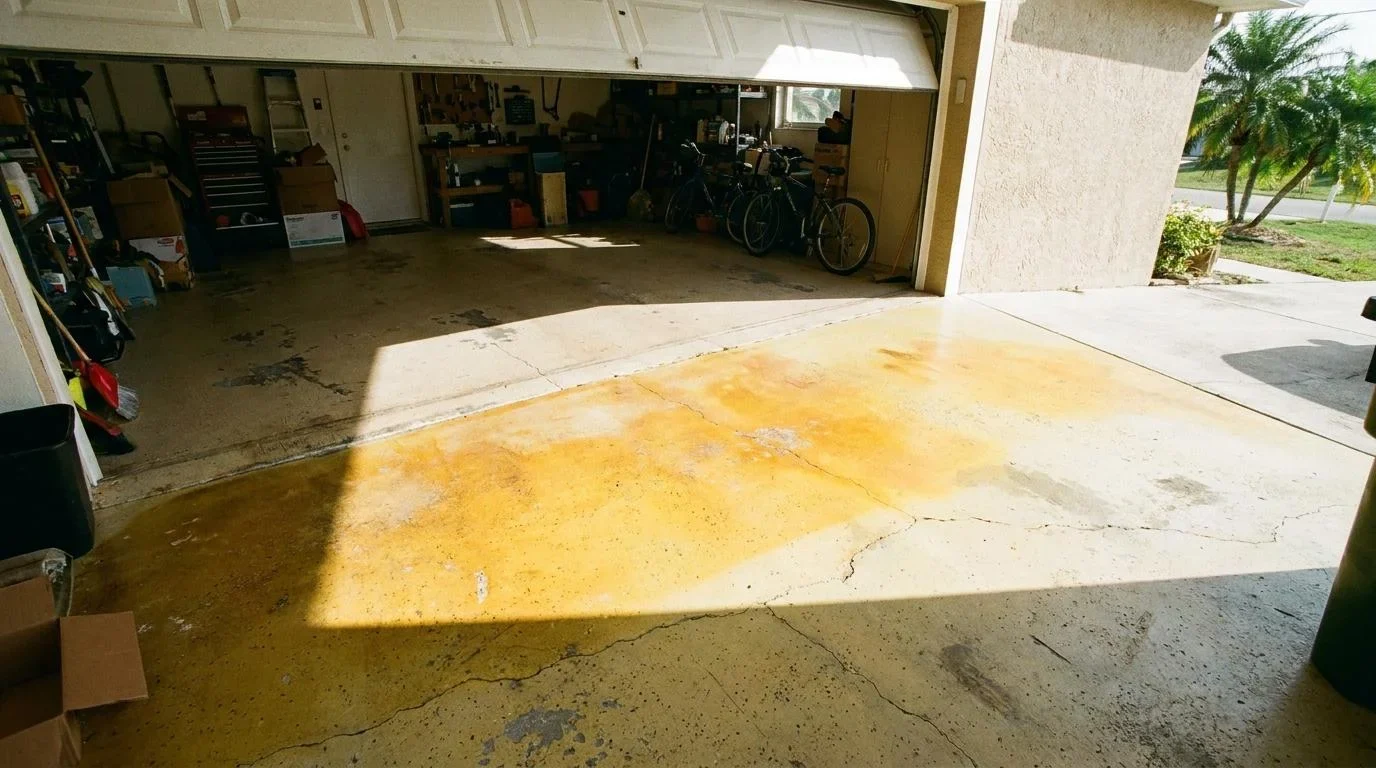
Standard epoxy coatings use aromatic chemical structures that absorb ultraviolet energy. When UV light hits these molecular bonds, they break apart and release byproducts that shift the resin's color from clear to amber. The process is called photodegradation, and it affects aromatic epoxy regardless of brand, thickness, or application method.
The reaction accelerates with more UV exposure. A garage floor that only sees indirect light through a window may take two to three years to show discoloration. A lanai, patio, or driveway coated in epoxy and exposed to direct Southwest Florida sun can show amber tones within weeks during peak summer months.
How Fast Yellowing Progresses in Southwest Florida
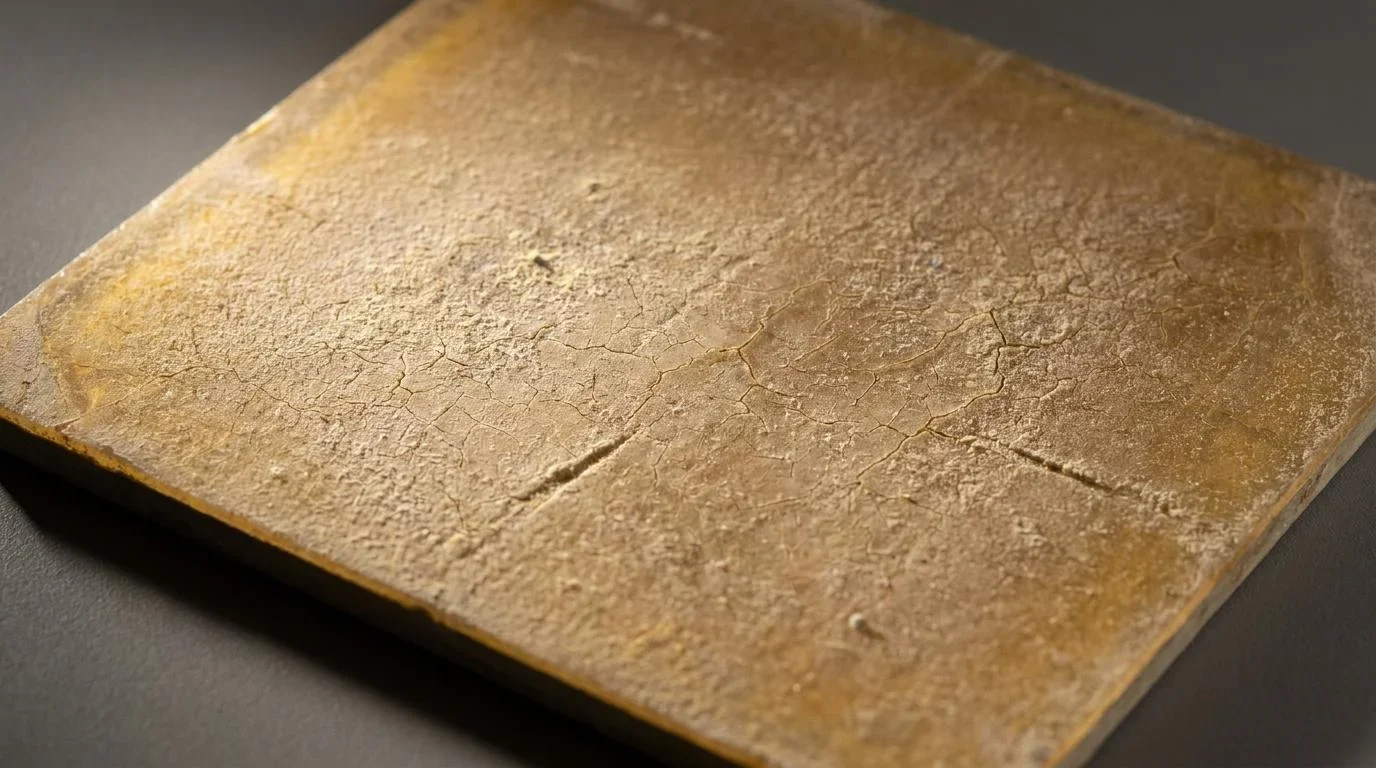
Southwest Florida's UV index sits in the extreme range for most of the year, and the region receives 300-plus days of sunshine annually. That combination makes this market one of the hardest environments for any UV-sensitive coating.
Garage Floors
Garages with south- or west-facing doors take the most direct sunlight. Yellowing typically appears within six to twelve months in the area closest to the garage opening and spreads inward over time. The performance trade-offs of epoxy compound this problem because UV damage also weakens the coating's resistance to hot tire pickup and chemical penetration.
Outdoor Surfaces
Lanais, patios, pool decks, and driveways coated with standard epoxy face constant UV bombardment with no shade relief. Visible yellowing on these surfaces can appear within weeks during June through September. Homeowners in Venice and Englewood see this damage frequently on older epoxy-coated lanai floors.
Why Polyaspartic Doesn't Yellow
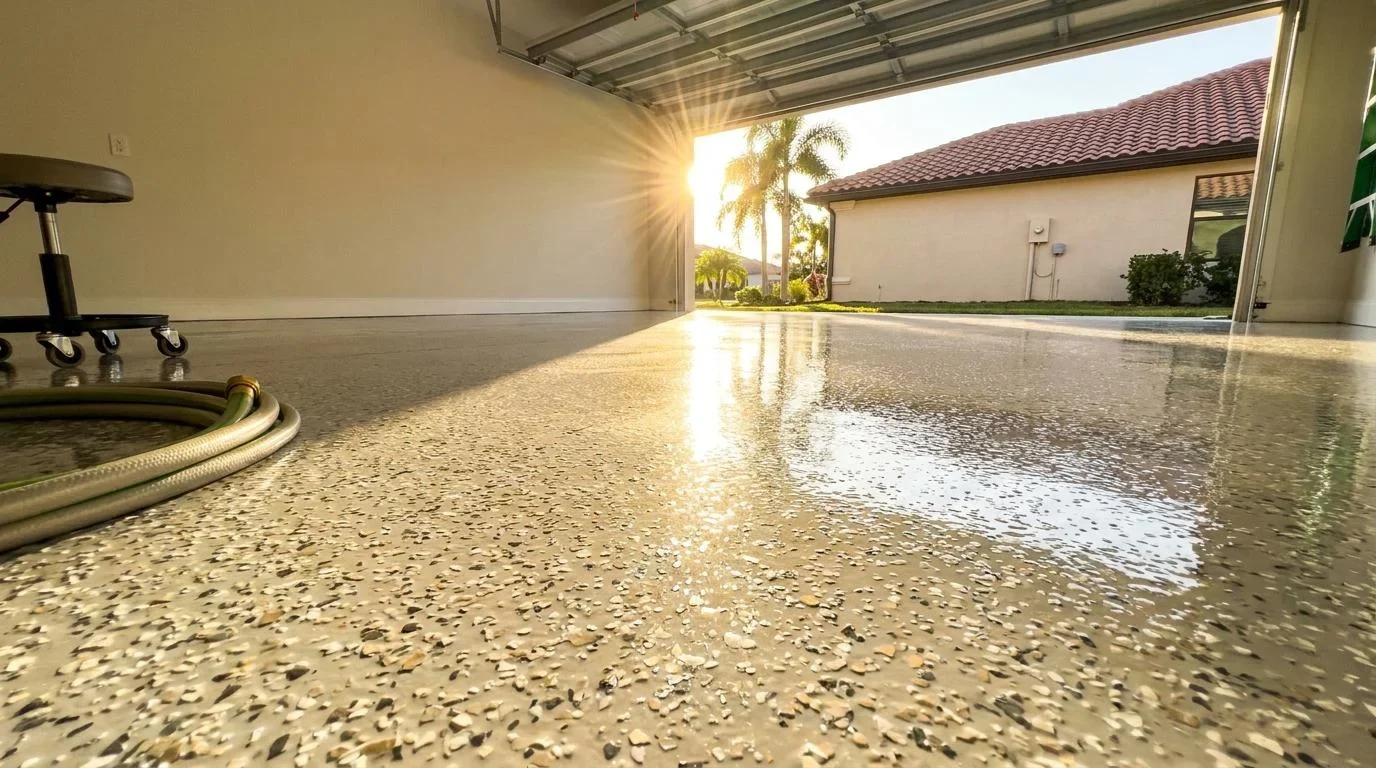
Polyaspartic coatings use aliphatic chemical structures instead of aromatic ones. Aliphatic bonds do not absorb UV energy the same way, so the photodegradation reaction that causes yellowing never starts. The coating stays clear through years of direct Florida sun exposure.
This isn't a UV-resistant additive layered on top of a vulnerable base. The UV stability is built into the chemistry of the resin itself. That distinction matters because additives wear off over time while the resin structure remains constant for the life of the coating. Floor Shield's polyaspartic system has been formulated specifically for outdoor performance in high-UV climates, which is why the 15-year non-prorated warranty applies equally to lanais, pool decks, and garage floor coatings.
Frequently Asked Questions
Can you fix yellowed epoxy flooring?
Yellowed epoxy flooring cannot be restored to its original color because the discoloration results from permanent chemical changes in the resin structure. Cleaning, buffing, or applying a topcoat over yellowed epoxy does not reverse the UV damage. The only lasting fix is removing the old coating and replacing it with a UV-stable system like polyaspartic.
Does polyaspartic coating yellow over time?
Polyaspartic coating does not yellow over time because its aliphatic resin chemistry resists UV-driven photodegradation. Standard epoxy uses aromatic bonds that break down under ultraviolet light, but polyaspartic's molecular structure does not absorb UV energy the same way. Floor Shield of SWFL's polyaspartic system maintains its original clarity and color throughout the 15-year warranty period.
Why does epoxy yellow faster in Florida than in northern states?
Epoxy yellows faster in Florida because the state receives significantly higher UV intensity and more annual sunshine hours than northern regions. Southwest Florida's UV index regularly reaches the extreme category during summer months. That sustained UV bombardment accelerates the chemical breakdown that also causes cracking, peeling, and other coating failures in epoxy systems exposed to Florida conditions.
Stop Yellowing Before It Starts
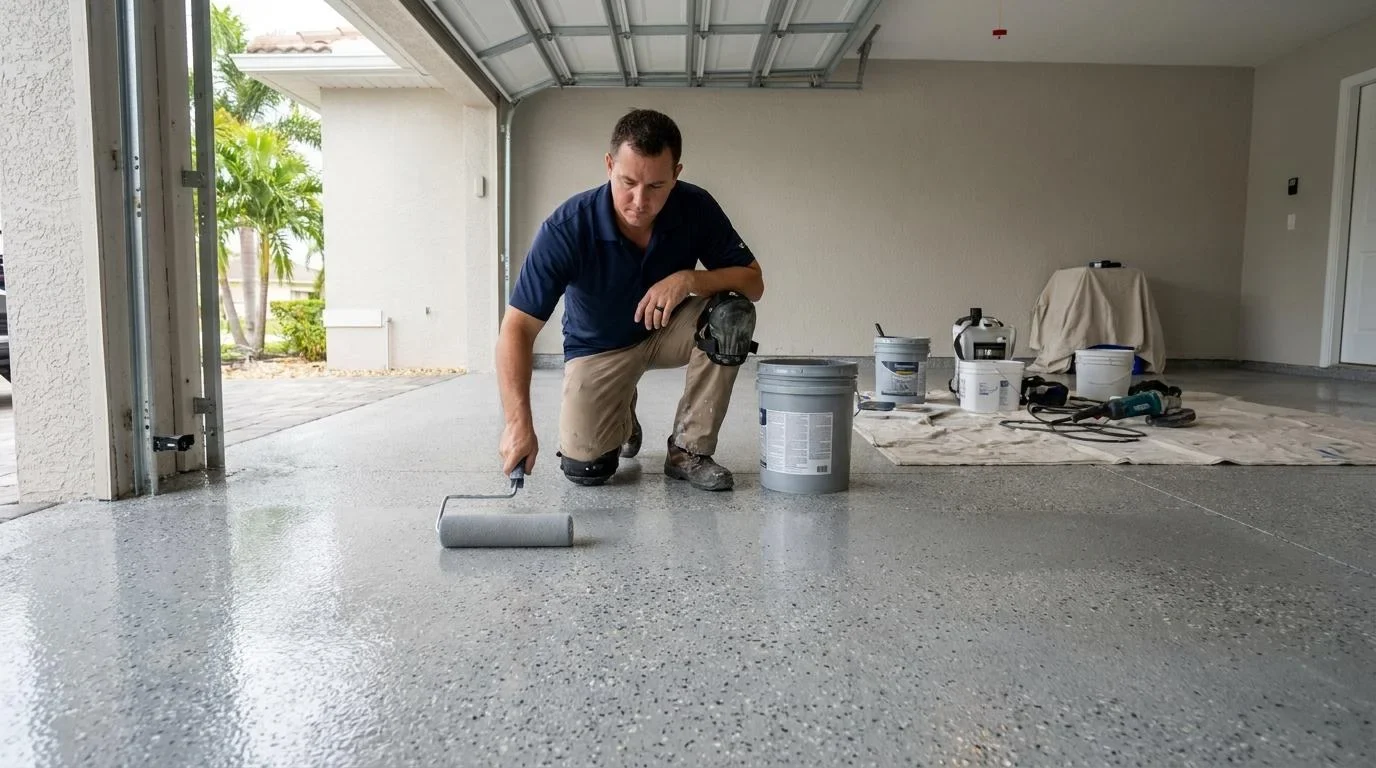
Once epoxy yellows, the damage is permanent. The only way to prevent it is to choose a coating chemistry that doesn't react to UV in the first place. Polyaspartic's aliphatic structure handles everything Southwest Florida's sun delivers without shifting color, losing gloss, or weakening over time.
Request a free estimate from Floor Shield of SWFL at (941) 681-8407 for a coating that stays the color you chose.