
Polyaspartic and polyurea floor coatings both cure faster than epoxy and resist chemicals, but they differ where it matters most in Florida: UV stability. Polyaspartic uses aliphatic resin that stays clear under direct sun, while most polyurea formulations use aromatic resin that yellows with UV exposure. For homeowners in Sarasota, Charlotte, and Manatee counties, Floor Shield of SWFL provides polyaspartic floor coating systems with UV stability built into the resin chemistry.
Contractors sometimes pitch polyurea and polyaspartic as interchangeable options, but that framing skips the chemistry that separates them. The two systems offer fast curing and strong adhesion, which is where the similarities end. How they react to UV rays and their flexibility under heat determine which system holds up in Southwest Florida and which starts failing within a year.
How the Two Chemistries Differ
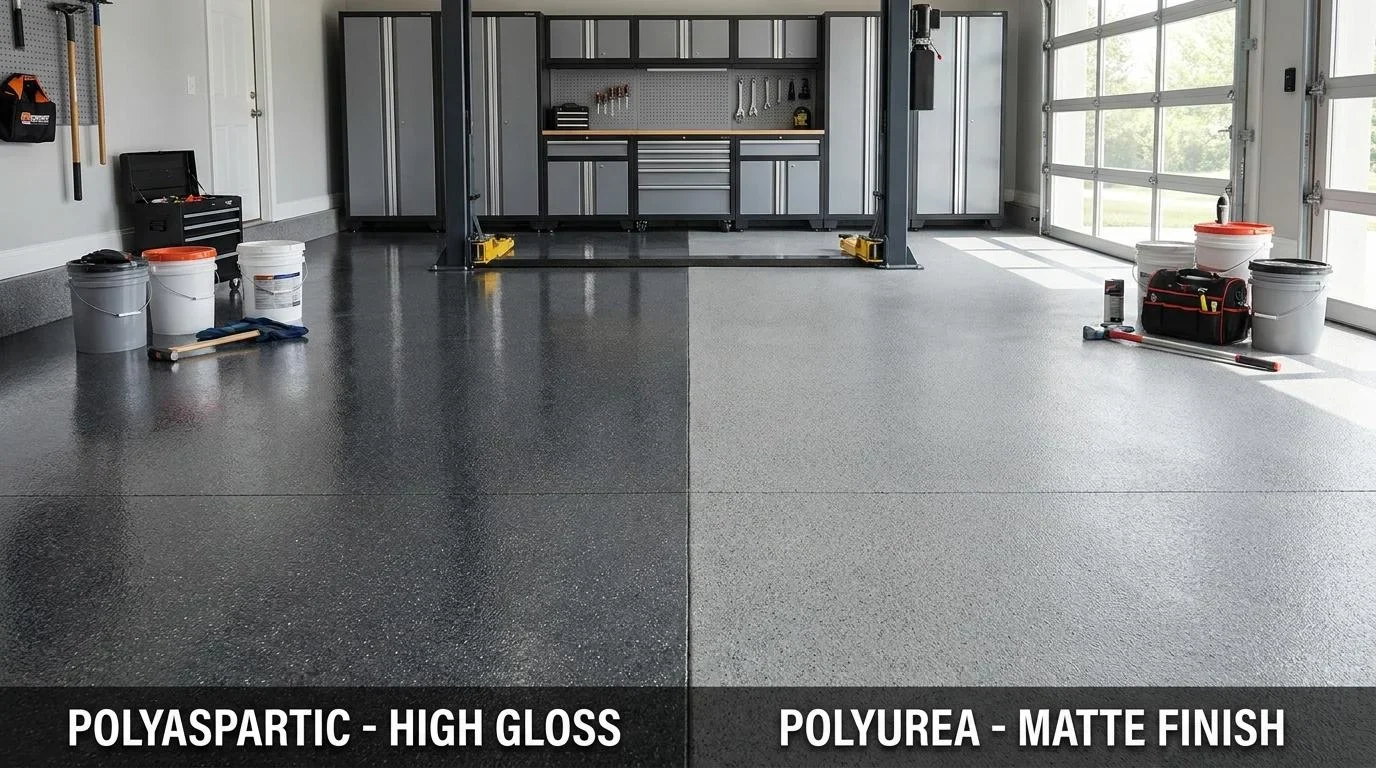
The long-term look and performance of your floor is driven by a small chemical distinction that controls how the coating handles the Florida sun.
Resin Structure
Polyaspartic coatings are a subset of the polyurea family, but they use aliphatic isocyanates instead of aromatic ones. That distinction controls how the coating responds to ultraviolet light. Aliphatic bonds do not absorb UV energy, so the coating stays clear. Aromatic bonds absorb UV and break down, which triggers the yellowing that affects aromatic coatings in high-UV environments like Southwest Florida.
Cure Speed and Working Time
Both systems cure faster than epoxy. Polyurea can gel in seconds to minutes depending on the formulation, which limits the installer's working time for broadcast flake and leveling. Polyaspartic offers a controlled pot life of 15 to 30 minutes, giving the crew enough time to spread the material evenly, broadcast decorative flake, and back-roll without rushing. That working window produces a more consistent finish, especially on larger garage floors and pool decks.
UV Stability in Florida Conditions
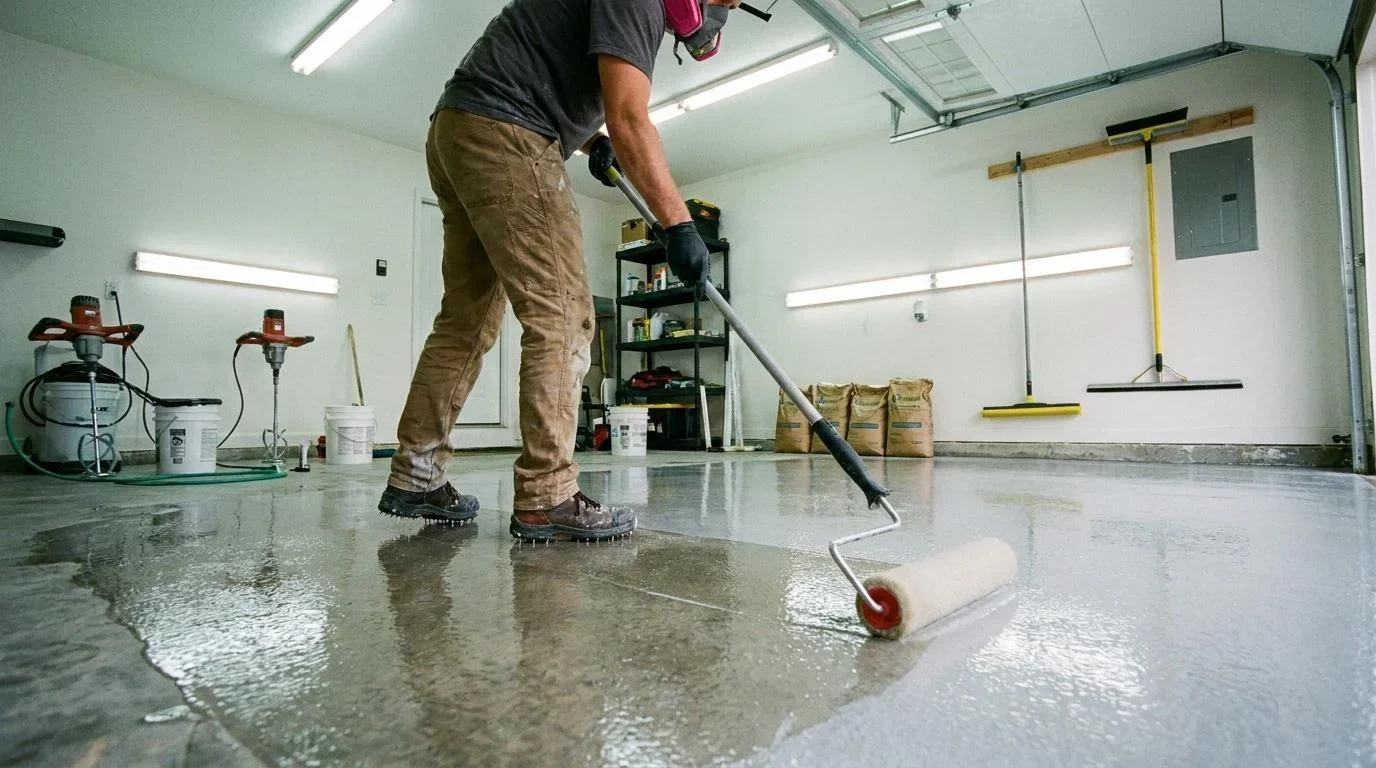
Southwest Florida's UV index reaches extreme levels for most of the year. Any coating exposed to that radiation through open garage doors, on lanais, or on pool decks must resist photodegradation or it will discolor and weaken.
Polyaspartic Performance
Polyaspartic's aliphatic chemistry does not react to UV light. The coating maintains its original color, clarity, and gloss through years of direct Florida sun exposure. This applies equally to clear topcoats and tinted systems. Floor Shield's polyaspartic installations across North Port and southern Sarasota County hold their appearance on garages, patios, and pool decks that face unshaded southern and western exposures.
Polyurea Performance
Most polyurea formulations use aromatic resin, which absorbs UV energy and breaks down over time. The result is amber yellowing on clear coats and color shift on tinted surfaces. In an enclosed garage with no sun exposure, aromatic polyurea holds its color indefinitely. On any surface that receives direct or reflected sunlight, the same UV trade-offs that affect standard epoxy apply to aromatic polyurea as well. Some manufacturers offer aliphatic polyurea, but those products are significantly more expensive and are less common in the residential market.
Flexibility, Adhesion, and Durability
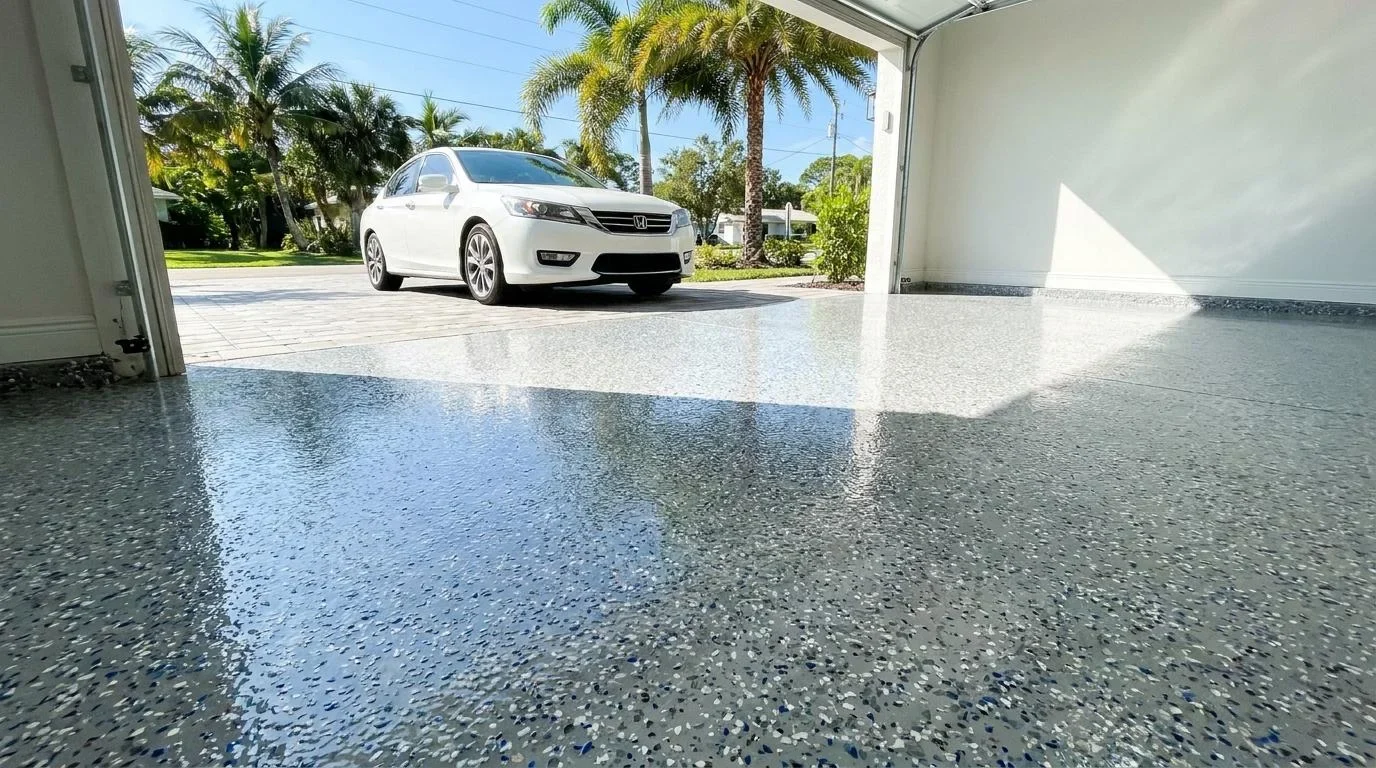
Both polyaspartic and polyurea bond strongly to properly prepared concrete and resist chemicals including oil, gasoline, and household cleaners. Polyurea is generally more flexible than polyaspartic, which gives it an advantage on substrates that experience heavy structural movement. For residential garage floors and pool decks in Southwest Florida, polyaspartic provides enough flexibility to handle thermal expansion without cracking, while its controlled cure and UV stability deliver a more reliable long-term result on sun-exposed surfaces.
Floor Shield's polyaspartic system includes diamond grinding for mechanical adhesion, a moisture-mitigating primer for Florida's high water tables, and a topcoat with anti-slip aggregate. The 15-year non-prorated warranty covers the full system against delamination, yellowing, and hot tire damage.
Frequently Asked Questions
Is polyaspartic the same as polyurea?
Polyaspartic is a type of polyurea, but the two are not the same in practice. Polyaspartic uses aliphatic isocyanates that resist UV degradation, while most polyurea products use aromatic isocyanates that yellow under sunlight. The cure behavior also differs: polyurea gels in seconds, while polyaspartic provides a controlled working window of 15 to 30 minutes for a more even application.
Which lasts longer, polyaspartic or polyurea?
Polyaspartic lasts longer on sun-exposed surfaces because its aliphatic resin does not break down under UV light. On surfaces shielded from sunlight, both coatings deliver comparable chemical resistance and adhesion. In Southwest Florida, where most garage floors receive at least partial sun through open doors, polyaspartic maintains its appearance and performance longer than aromatic polyurea.
Why do some contractors recommend polyurea over polyaspartic?
Some contractors recommend polyurea because its extremely fast cure allows same-day project completion with less environmental sensitivity during application. The rapid gel time can also reduce labor costs on simple projects. However, that speed limits the installer's ability to achieve a consistent finish with decorative flake, and the aromatic resin in most polyurea products introduces UV yellowing risk on any surface exposed to sunlight.
Choose a Coating Built for the Florida Sun
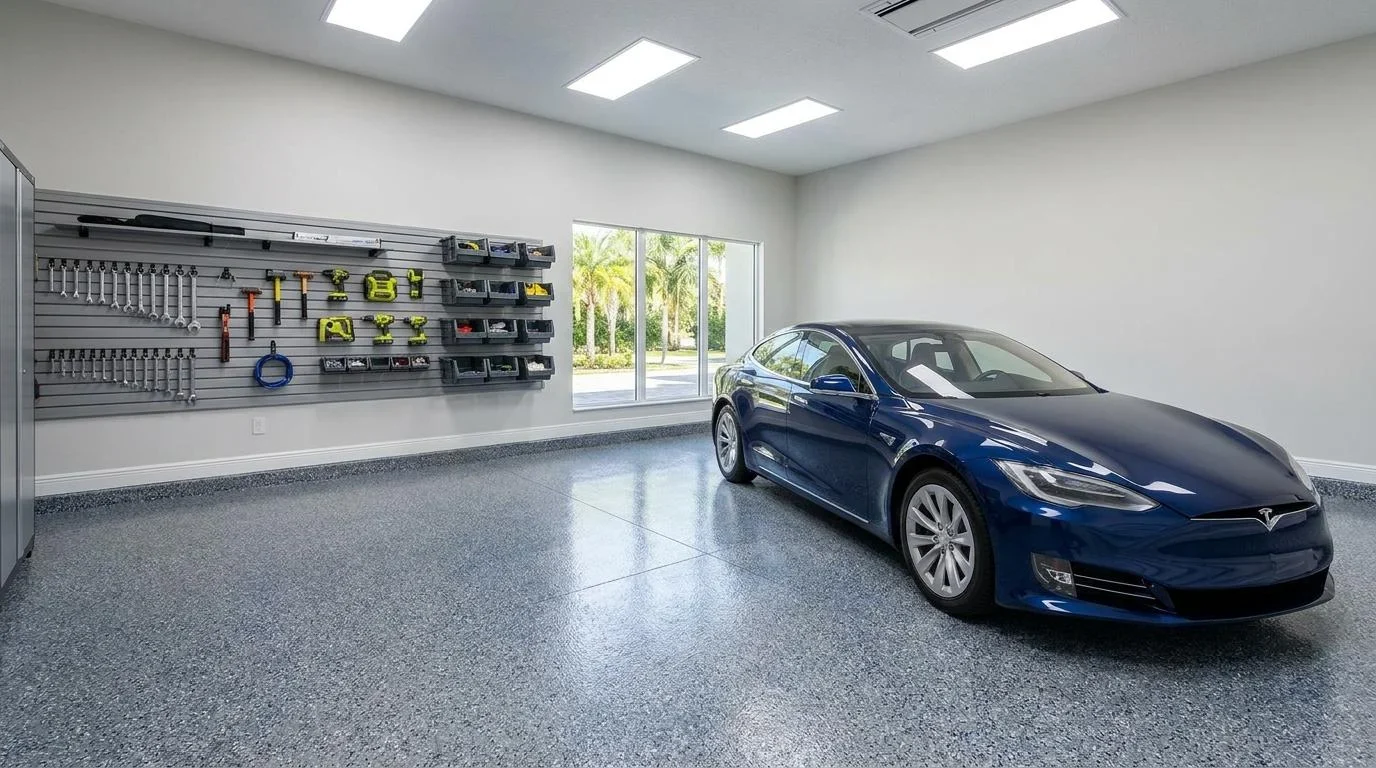
Polyurea works in enclosed spaces that never see sunlight. For every other application in Southwest Florida, polyaspartic delivers the UV stability, controlled application, and long-term clarity that aromatic polyurea can’t match. The chemistry difference is small on paper but visible on the floor within the first year of sun exposure.
Request a free estimate from Floor Shield of SWFL at (941) 681-8407 to see how polyaspartic performs on your garage, patio, or pool deck.